
















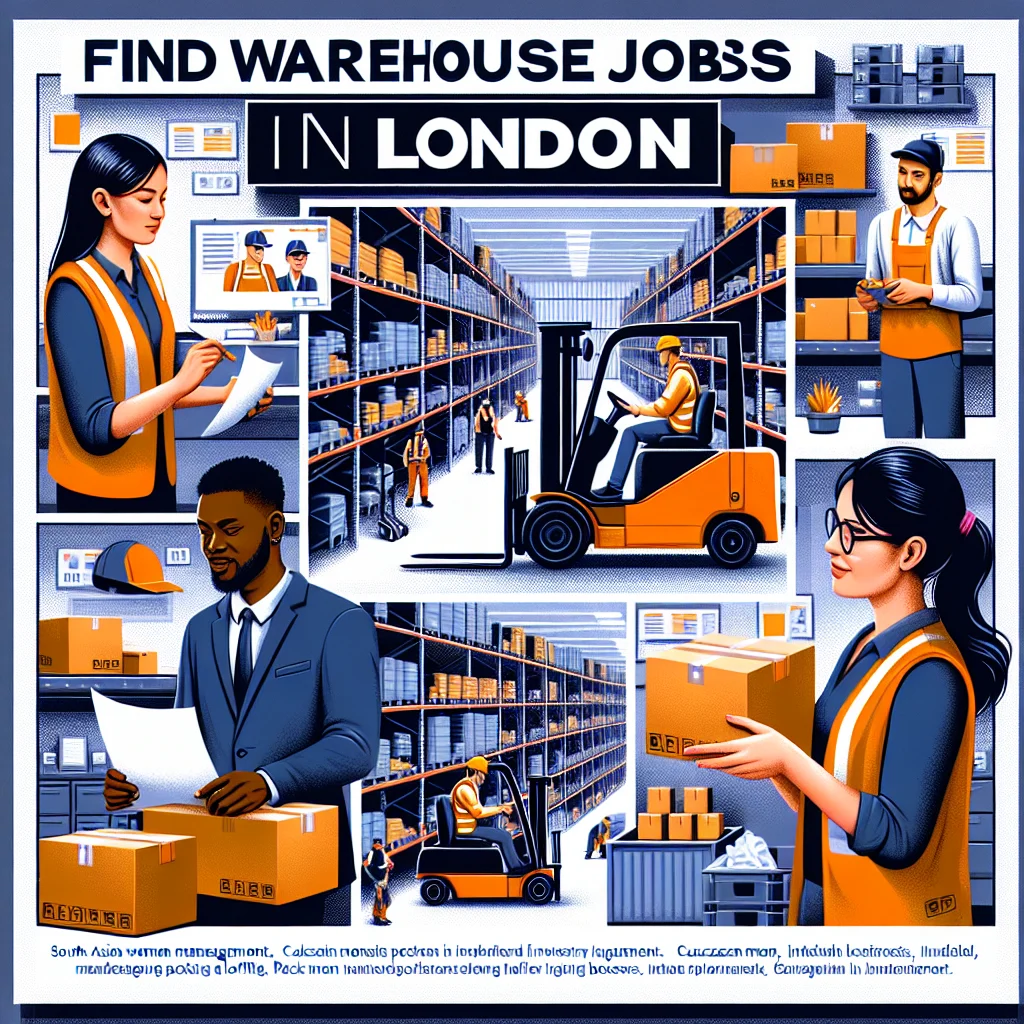
Team Workers Direct: Warehouse Jobs in London Immediate Start

Job Description: Warehouse Jobs in London
Main Responsibilities
- Receive and process warehouse stock products (pick, unload, label, store).
- Operate and maintain preventively warehouse vehicles and equipment.
- Follow quality service standards and comply with procedures, rules, and regulations.
- Assist with inventory controls by collecting stock location orders and printing requests.
- Maintain a safe and clean work environment by keeping shelves, pallet area, and workstations neat; organize warehouse and work area for orderliness at all times.
- Report any discrepancies in inventory to the management.
- Communicate and cooperate with supervisors and coworkers.
- Carry out tasks as assigned by the warehouse supervisor/manager.
Required Skills & Qualifications
- Good organizational and time management skills.
- Ability to lift heavy objects.
- Current forklift license (if required for the role).
- Excellent verbal and written communication skills.
- Ability to work as part of a team and follow instructions.
- Basic computer skills for inventory management.
Experience
- Proven working experience in a warehouse preferred, but entry-level positions may be available for those without experience.
- Experience operating warehouse equipment, such as forklifts, pallet jacks, and shrink wrap machines, is beneficial.
Various Warehouse Jobs in the Area Including Pay Rates
- Warehouse Operative: Entry-level warehouse staff. Pay rates typically range from £12 to £13 per hour.
- Forklift Driver: Requires a valid forklift license. Pay rates generally vary between £14 to £15 per hour.
- Warehouse Supervisor/Manager: Responsible for overseeing warehouse operations and staff. Compensation for these positions can range from £25,000 to £35,000 per annum depending on experience and company size.
- Inventory Control Specialist: Focuses on managing inventory levels and accuracy. Salaries can range from £18,000 to £28,000 annually.
- Warehouse Clerk/Administrator: Handles administrative tasks in a warehouse setting. Pay rates vary from £12 to £13 per hour.
- Order Picker/Packer: Specialize in preparing and packaging orders for delivery. The hourly wage tends to be in the range of £12 to £13.
- Logistics Coordinator: Plan and coordinate the transportation and storage of goods. Salaries typically start from £20,000 to £30,000 a year.
Introduction
Finding a job in a bustling city like London can be a daunting task, especially when it comes to the logistics sector. With its strong economic foundation and an ever-expanding e-commerce industry, warehouse jobs are in constant demand. From entry-level positions to managerial roles, the variety of opportunities within the warehouse employment sector in London is vast and varied. Whether you're just entering the workforce, looking for a career change, or seeking advancement opportunities, knowing the right steps to take can make all the difference.
Understanding the Warehouse Job Market in London
The warehouse job market in London is dynamic and diverse, reflecting the city's status as an international hub for trade and commerce. Major online retailers, distribution companies, and logistics firms have numerous warehouses scattered across the city and its outskirts. These businesses require a steady stream of workers to handle various tasks such as inventory management, order processing, packaging, and distribution.
Positions range from material handlers, forklift operators, and supply chain analysts to operations managers and logistics coordinators. The demand for warehouse workers often ramps up during seasonal peaks, such as the holidays, and with the growth of online shopping, full-time positions are increasingly available year-round.
Where to Look for Warehouse Jobs in London
To kickstart your job search, it's important to know where to look. Start by exploring online job boards such as Indeed, Reed, Totaljobs, and CV-Library, which frequently list warehouse positions in London. These websites allow you to filter search results based on location, job type, and salary expectations. Additionally, LinkedIn is a valuable resource for professional networking and job hunting, with many employers posting vacancies on their company pages. It's also advisable to check out the career pages of large retailers and logistics companies, as they often have dedicated recruitment portals for their warehouse vacancies.
Recruitment agencies specializing in manufacturing and logistics can be instrumental in finding a warehouse job. They have insider knowledge of the industries and often have exclusive listings that aren't publicly advertised. Registering with a recruitment firm can also provide you with job market insights and personalized assistance in improving your CV and interview techniques.
Don't underestimate the power of networking when it comes to job hunting. Connecting with people already working in the sector can lead to valuable information and references that can help you land a job. Attend job fairs, industry meet-ups, or seminars to expand your network within the warehouse job market.
Qualifications and Skills Required
While some warehouse jobs do not require formal qualifications and provide on-the-job training, there are certain skills and certifications that can improve your chances of employment. For instance, a forklift operation certificate is highly advantageous if you're aiming for a role that involves operating machinery. Familiarity with warehouse management systems (WMS) and basic computer literacy can also make you a more attractive candidate for roles that demand inventory tracking or data entry.
Soft skills such as teamwork, effective communication, and problem-solving abilities are essential since warehouse work often involves coordinating with others and handling unforeseen challenges. Physical fitness is another important aspect, given that some warehouse positions may require lifting heavy items or being on your feet for extended periods.
For those looking to advance into supervisory or management roles, a background in logistics or a related field, along with experience in leading teams, is usually required. Pursuing additional education, such as a diploma or degree in supply chain management or related studies, can significantly enhance your prospects of moving up the career ladder.
Preparing Your Application
When you have identified potential job vacancies, the next step is to ensure your application stands out. A well-crafted CV that highlights relevant experience, accomplishments, and skills is vital. Be sure to tailor your CV and cover letter for each application, emphasizing the specifics that make you a strong fit for the position you're applying for. Loosely related experiences from other sectors that demonstrate transferable skills can also be included, particularly if you're new to the warehousing industry. Ensure that any certifications or licences relevant to the role are up to date and clearly listed.
If you have gaps in your employment history, be prepared to explain them positively, focusing on skills or knowledge you may have gained during those periods. Job interviews for warehouse positions can range from casual to formal, but it's always best to go in well-prepared. Research the company beforehand, understand the job specifics, and think of examples from your past experiences that illustrate how you've tackled similar responsibilities. It's also wise to prepare questions for your potential employers about the role and company culture, showing your interest and proactive nature.
Navigating the Job Market During COVID-19
The COVID-19 pandemic has significantly impacted the job market, but the warehouse and logistics sectors have largely remained active, given their essential role in supply chains. After all, the need for consumer goods and medical supplies, among other items, has increased, and so has the demand for workers to process and distribute these products. When searching for warehouse jobs during this period, pay attention to the health and safety measures that companies have in place to protect their employees from the virus.
It's a key consideration for both your safety and job satisfaction. Additionally, the pandemic has accelerated the shift towards digital recruitment processes. Be prepared for remote interviews via video calls, and ensure you're comfortable using platforms like Zoom or Microsoft Teams. You may also be asked to complete virtual assessments or training modules before commencing a warehouse job.
Conclusion
Finding a warehouse jobs in London requires a strategic approach, the right qualifications and skills, and an understanding of the local job market. The sheer volume of e-commerce and the city's role as a global trading center create numerous opportunities across the warehousing sector. By leveraging online job boards, recruitment agencies, networking, and maintaining a polished application, individuals can successfully navigate the landscape of warehouse employment in London.
A strong work ethic, adaptability, and a commitment to continual learning will serve as valuable assets on your journey toward securing the right warehouse position. As with any job search, persistence and a positive attitude are often the keys to unlocking promising opportunities in this lively and ever-evolving field.
FAQs – Find Warehouse Jobs in London with Team Workers Direct
How can I find warehouse jobs in London?
To find warehouse jobs in London, you can start by searching online job boards such as Indeed, Totaljobs, or Reed. Additionally, you can check out recruitment agencies that specialize in logistics and warehousing roles. It is also worth visiting company websites directly, as they may list vacancies not posted elsewhere. Networking through social media platforms like LinkedIn and attending job fairs can also reveal opportunities in the warehouse sector in London.
What qualifications or skills are required for warehouse jobs in London?
Warehouse jobs usually require a good level of physical fitness due to the manual handling involved. Skills such as organization, attention to detail, and the ability to work in a team are essential. Some roles may require specific qualifications like forklift driving certifications, although many employers offer on-the-job training.
Are there part-time or temporary warehouse jobs available in London?
Yes, there are often part-time or temporary warehouse positions available, especially during seasonal peaks in demand, like Christmas or summer sales. Temporary agencies are a good resource for finding such roles, as many businesses rely on these agencies to fill short-term gaps in their workforce.
Is prior experience necessary for warehouse jobs in London?
While prior experience is beneficial, many warehouse positions offer on-the-job training, which can be ideal for individuals new to this sector. Entry-level roles such as warehouse operative or picker-packer often do not require previous experience, giving you the opportunity to gain valuable experience.
What is the typical salary for warehouse jobs in London?
Salaries for warehouse jobs in London vary depending on the role, experience, and company. On average, entry-level warehouse operatives can expect to earn anywhere from the UK minimum wage to around £10-£12 per hour. More experienced individuals or those with specialized skills, such as forklift operation, may command higher wages. Always verify the latest salary information, as it fluctuates with market conditions and living costs.
WHY CHOOSE OUR TEAM WORKERS DIRECT – THE PLACEMENT INDUSTRY? |
CONTACT INFORMATION |
|---|---|
|
|