

















Head Chef Jobs in Manchester M22 | Immediate Start & Competitive Pay
Workers-Direct is urgently seeking a skilled and passionate Head Chef for a prestigious temporary-to-permanent placement in the heart of Manchester M22. Secure an ASAP start, a competitive salary package, and the potential for a long-term career with a leading hospitality establishment.
Head Chef Job Description: Manchester M22
Our client, a highly-regarded restaurant group with a flagship venue in Manchester M22, is seeking a dynamic Head Chef to lead their kitchen brigade through an exciting period of growth. This is not just another chef job; it’s a leadership opportunity to shape menus, mentor a team, and deliver an exceptional dining experience that puts Manchester on the culinary map. As the Head Chef, you will have full operational control of the kitchen, from sourcing the finest local produce from the North West to managing food costs and driving profitability.
By applying through Workers-Direct, you gain direct access to this exclusive opportunity without the clutter of general job boards. We specialise in fast-tracking top culinary talent into roles with immediate start dates, much like we do for Chef Jobs in Bristol or Temporary Chef roles in Shoreditch. Our dedicated consultants in the Manchester region have an in-depth understanding of the local hospitality scene and will champion your application, ensuring you are presented as the premium candidate you are.
Key Responsibilities & Duties
- Take full culinary leadership of the kitchen, including menu development, recipe standardisation, and plating design for a la carte and seasonal tasting menus.
- Manage all kitchen operations, including stock control, ordering from suppliers, budgeting, and achieving gross profit targets.
- Recruit, train, mentor, and motivate a team of chefs, commis, and kitchen porters, fostering a culture of excellence, safety, and continuous improvement.
- Ensure strict adherence to all Food Safety and Health & Safety regulations (HACCP, Safer Food Better Business), maintaining a 5-star EHO rating.
- Work collaboratively with front-of-house management and the General Manager to deliver a seamless guest experience and contribute to marketing initiatives.
Essential Skills & Requirements
- Proven experience as a Head Chef, Executive Sous Chef, or Kitchen Manager within a high-volume, quality-focused restaurant.
- Formal culinary qualification (NVQ Level 3 or equivalent) and up-to-date Food Hygiene Level 3 certification.
- Exceptional leadership and people-management skills, with a track record of reducing staff turnover and building a cohesive team.
- Strong financial acumen with experience managing kitchen P&L, food costs (aiming for <28%), and labour budgets.
- A creative and innovative approach to modern British and international cuisine, with a passion for seasonal, locally-sourced ingredients.
Why Choose Workers-Direct for Your Chef Career in Manchester?
As a leading temporary staffing agency with a dedicated Manchester office, we don't just fill roles; we build culinary careers. We understand the pressure and precision required in a professional kitchen, which is why we use rigorous candidate screening strategies to match only the most capable chefs with the best establishments. When you register with us, you gain a partner committed to your professional growth.
Get paid reliably every week, with no delays. We handle the admin so you can focus on your craft.
Our consultants live and work in Manchester. We know the best restaurants, pubs, and hotels in M22 and beyond.
From temporary Sous Chef roles to permanent Head Chef positions, we provide a clear route for progression.
Access opportunities not advertised publicly. We have direct relationships with top employers across the city.
Salary, Benefits & How to Apply
Compensation & Package
Dependent on experience and venue scale. Negotiable for exceptional candidates.
Lucrative bonus scheme based on kitchen profitability, GP targets, and guest feedback.
Includes pension, staff meals, continuous training opportunities, and potential accommodation assistance.
The Application Process
- Submit Your CV: Use the application button or email provided below. Ensure your CV details all relevant Head Chef experience, covers, and achievements.
- Quick Screening Call: A friendly Workers-Direct consultant will call you to discuss your experience, career goals, and suitability for the Manchester M22 role.
- Client Interview: We will arrange a formal interview (often within 48 hours) with the hiring manager at the restaurant. We provide full briefings and interview preparation.
- Offer & Onboarding: Upon success, we manage the job offer, contract, and all onboarding paperwork for a smooth, fast transition into your new role.
Ready to Lead a Kitchen in Manchester?
This Head Chef position is interviewing now and will not be available for long. Take the next step in your culinary leadership career.
OR
If you are interested email your cv and info to [email protected]
Frequently Asked Questions: Head Chef Jobs
Salaries for Head Chef roles in the Manchester area vary significantly based on the type and prestige of the establishment, covers per service, and your experience. For a quality restaurant in postcodes like M22, you can expect a base salary ranging from £38,000 to £45,000 per annum. High-end gastropubs or fine-dining venues may offer higher packages, potentially up to £55,000, often supplemented by a performance-related bonus tied to kitchen profitability and guest satisfaction scores.
It's crucial to discuss the full package, including bonus structure, pension, and any additional benefits like tronc or accommodation support, during your interview. Workers-Direct will provide full transparency on the offer before you proceed.
We specialise in immediate start placements. For a senior role like a Head Chef, the process is streamlined but thorough. From the point of application, we aim to conduct our initial screening call within 24 hours. If suitable, we can often arrange a first-stage interview with the client within 2-3 working days. For candidates who are immediately available and impress in interviews, a start date within the same week is not uncommon. The speed is similar to how we operate for other urgent roles, such as Immediate Start Jobs in Sunderland or Warehouse Jobs in Luton.
While a formal culinary qualification (e.g., NVQ Level 3, City & Guilds) is highly desirable and often requested by premium employers, demonstrable experience and a proven track record can be equally, if not more, important. The absolute non-negotiable requirement is a valid Food Hygiene Certificate at Level 3. Beyond paper qualifications, employers are seeking evidence of leadership, financial management (food cost control), creativity in menu development, and the ability to motivate and train a team. Your CV should highlight achievements, such as improving GP%, reducing waste, or successfully launching new menus.
This Head Chef role in Manchester M22 is a temp-to-perm position, designed as a pathway to a permanent leadership role within a respected group. Success in this position can open doors to several career avenues: progressing to Group Head Chef overseeing multiple sites, moving into Executive Chef positions with broader operational remits, or transitioning into food consultancy or business development roles for suppliers. Workers-Direct supports career growth long-term; we often help successful Head Chefs find their next challenge, whether it's in Manchester, elsewhere in the UK like for a Head Chef in Birmingham B2, or even internationally.
Contact Our Manchester Hospitality Team
Phone: +44 (0) 20 3086 8090
Email: [email protected]
Address: Workers-Direct, Manchester M22 Region (Wythenshawe & Surrounding Areas)
Discuss your Head Chef career aspirations with a specialist consultant who understands the Manchester culinary landscape inside and out.
Explore More Opportunities
Workers-Direct is a national agency with local expertise. Whether you're a chef, a construction professional in Liverpool, or seeking admin roles nationwide, we can help.
Workers-Direct is an equal-opportunities employment agency and recruitment business. Registered in England. All job adverts are placed on behalf of our clients. Salary indications are a guide based on market rates and client briefs. © 2024 Workers-Direct.
The Manchester M22 Culinary Landscape: Your New Kitchen’s Locale
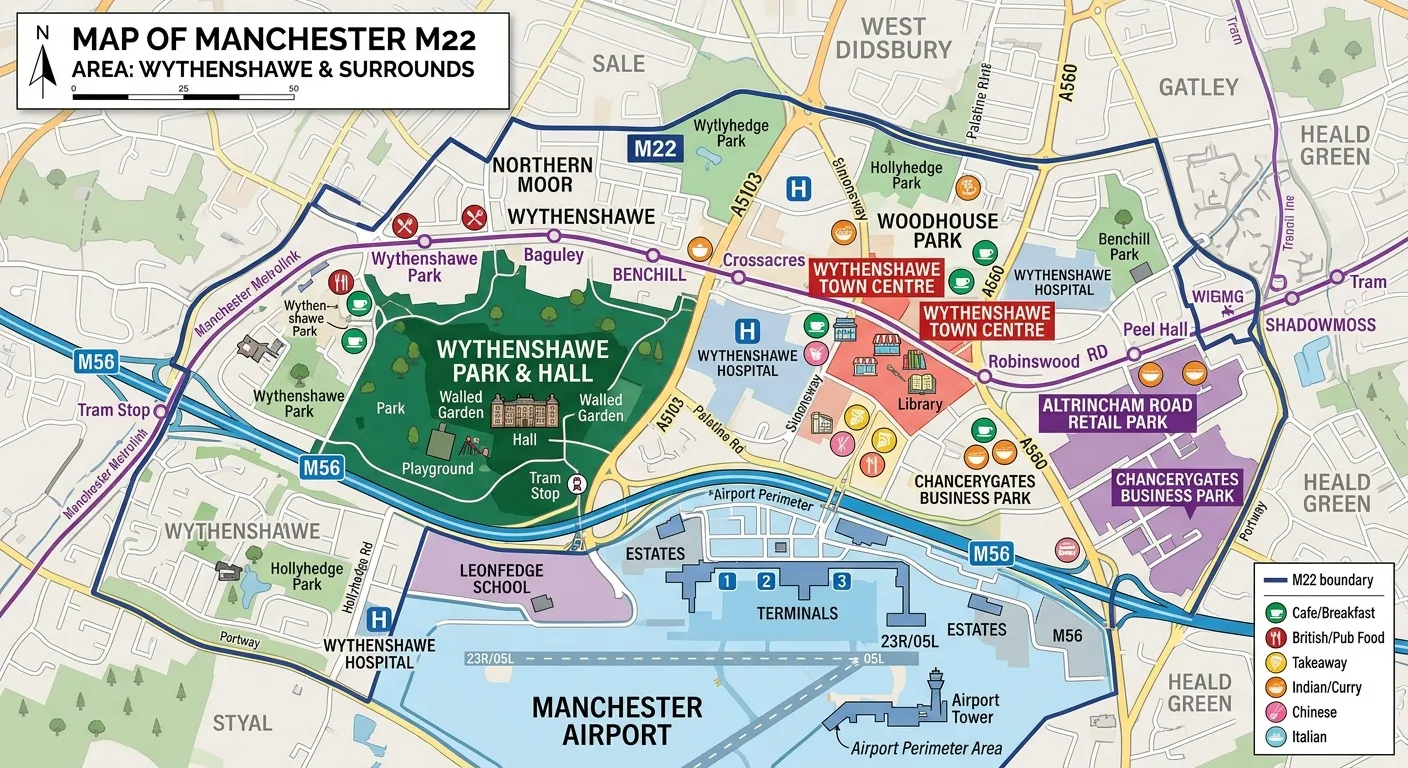
Stepping into a Head Chef role in Manchester M22 (encompassing Wythenshawe, Northern Moor, and Baguley) places you at the heart of a uniquely diverse and evolving culinary district. Unlike the city centre's dense competition, M22 offers a blend of established community favourites and ambitious new ventures seeking to define a distinct food identity. The area is a microcosm of Greater Manchester's demographic richness, demanding a menu that can cater to traditional British palates, vibrant South Asian communities, and a growing professional population seeking high-end casual dining.
The successful Head Chef here must be part culinary artist, part local strategist. Sourcing is paramount. Building relationships with suppliers from the nearby Manchester Wholesale Fruit & Vegetable Market and artisan producers in Cheshire and the Peak District is a key early task. The locale also presents specific operational considerations, from tailoring service patterns to match local event schedules at the nearby Manchester Airport hotels to understanding the weekend footfall dynamics of the Wythenshawe Town Centre.
Local Competitor Analysis & Market Positioning
A strategic Head Chef doesn’t just cook; they understand their battlefield. In M22, you’ll encounter:
- The Premium Gastropub: Often the area's award-holders, focusing on refined classics and a stellar Sunday lunch service. Your menu must differentiate through innovation and execution precision.
- The Family-Run Ethnic Restaurant: Boasting incredible authenticity and loyal followings. Competing isn't about imitation but about offering a complementary, elevated experience they cannot.
- The High-Volume Hotel Kitchen: Catering to conference and airport traffic. This role is distinct, focusing on banquet excellence and consistent à la carte quality under pressure.
Seasonal Menu Development: A 12-Month Strategy for the North West
Your creativity will be framed by the glorious seasons of the North West. Here’s a snapshot of how a Head Chef leverages local produce:
Spring (Mar-May):
Feature Lancashire asparagus, Rhubarb from the"Force Valley", and early lamb. Think starters of pan-seared scallops with wild garlic pesto sourced from Cheshire woodland.
Autumn (Sep-Nov):
Celebrate game season with venison from the Peak District, wild mushrooms foraged locally, and blackberries. A main of slow-braised venison haunch with heritage carrots and juniper is a quintessential offering.
The Head Chef as Business Leader: Mastering Kitchen Financials
Beyond the pass, the modern Head Chef is a de facto business unit manager. This section breaks down the financial acumen required to not only keep your kitchen running but to make it a profit centre that justifies your leadership and bonus.
Decoding Food Cost Percentage (GP%): A Practical Guide
The industry standard target for food cost is typically 28-32% of total food sales. Achieving this in M22 requires a granular approach:
| Menu Item | Portion Cost | Menu Price | Food Cost % | Action for Improvement |
|---|---|---|---|---|
| 8oz Fillet Steak | £6.80 | £28.50 | 23.9% | Excellent. Maintain supplier relationship for consistent quality/price. |
| Pan-Seared Sea Bass | £4.20 | £18.00 | 23.3% | Strong. Consider a seasonal garnish upsell. |
| Heritage Beetroot & Goat's Cheese Terrine (V) | £1.90 | £9.50 | 20.0% | High-margin star. Feature prominently to boost overall GP. |
| Truffle & Wild Mushroom Risotto | £3.50 | £16.00 | 21.9% | Good, but review truffle oil brand vs. cost. Could source local wild mushrooms more aggressively in season. |
Waste Tracking & Reduction: From Bin to Bottom Line
A staggering 10-15% of food purchased can be wasted in an unmanaged kitchen. Implementing a daily waste log is non-negotiable. Categorise waste:
- Preparation Waste: Can carrot tops be used for stock? Can fish bones be fumet?
- Over-production: Refine forecasting using past sales data (cover count, day of week).
- Spoilage: Tighten fridge organisation (FIFO - First In, First Out) and ordering schedules.
Case Study: A Head Chef in a similar Manchester venue reduced weekly food waste by 40% in 3 months by introducing a"chef's special" using trim from premium cuts and perfectly edible but cosmetically imperfect vegetables. This added an extra £200-£300 weekly revenue.
Labour Cost Optimisation: Scheduling for Efficiency
Labour is often the second largest cost. Smart scheduling is key:
- Use historical data to align staff hours precisely with anticipated covers.
- Cross-train team members (e.g., a larder chef who can help on pastry during prep).
- Invest in skills development to increase productivity per hour, reducing the need for excessive overtime.
Pro Tip: Your relationship with the Operations Manager is critical. Present your weekly schedules with a clear business rationale, tying labour hours directly to forecasted revenue and events. This demonstrates your managerial foresight.
Leadership in Action: Building & Sustaining a High-Performance Kitchen Brigade
The difference between a good kitchen and a great one is culture. As Head Chef, you are the chief culture officer. Here’s a deep dive into transforming a team.
Case Study: Turning Around a Demotivated Team
Situation: A Head Chef (let's call him David) took over a kitchen in a South Manchester gastropub. Morale was low, staff turnover was 80% annually, and standards were inconsistent. The team was reactive, not proactive.
Action (The First 90 Days):
- Week 1-2: Listen & Observe. David worked every station, asked questions, and held one-to-ones without making immediate changes. He identified two talented but disengaged sous chefs and a commis with untapped potential.
- Week 3-4: Set Non-Negotiables & Quick Wins. He established three simple, non-negotiable standards: mise-en-place readiness times, uniform policy, and a clean-as-you-go mandate. He also introduced a"family meal" where the team ate together before service, fostering communication.
- Month 2: Empower & Delegate. He tasked each sous chef with developing one new special per week, giving them ownership. He started weekly 15-minute skill sessions (e.g., perfecting a beurre blanc).
- Month 3: Recognise & Reward. He implemented a simple"Employee of the Month" based on peer nominations, with a prize of a meal for two at a competitor's restaurant (to encourage learning).
Result: Within 6 months, staff turnover dropped to 20%. GP improved by 2.5% due to reduced waste and better portion control. Online review scores for"food" increased from 3.8 to 4.6 stars. The kitchen became a place where people wanted to build a career.
Handling Common Kitchen Conflicts
- Station Rivalry (e.g., Grill vs. Larder): Address publicly but frame it as a drive for collective excellence, not blame. Rotate staff occasionally to build empathy.
- Resistance to New Procedures: Explain the"why" behind every change."We are changing how we store shellfish because it reduces spoilage risk by 30%, which protects our bonus pool."
- Generational Gaps (Old-school vs. New Techniques): Bridge the gap. Have the experienced chef teach butchery, while the newer chef demonstrates sous-vide efficiency. Create mutual respect for different skill sets.
Structured Training & Development Framework
A motivated team is a learning team. Implement a simple progression ladder:
- Commis Chef I/II: Focus on foundational knife skills, basic sauces, and station hygiene. Monthly skill check-ins.
- Chef de Partie: Master a specific station, begin learning ordering and waste tracking for their section. Sponsor a Level 2 Food Safety course.
- Sous Chef: Develop leadership skills, menu costing input, and staff scheduling. Support towards a Level 3 Award in Supervising Food Safety.
Leveraging Technology: The Digital Head Chef's Toolkit
Today's top kitchens run on data as much as they do on gas. Familiarity with key systems is now an implicit requirement for a forward-thinking Head Chef.
Systems like Chefsheet, Marketman, or Lightyear automate stock takes, predict order quantities, and track price fluctuations from suppliers.
Benefit: Can reduce food costs by 3-5% through precise ordering and identifying shrinkage.
Tools such as ChefTec or Optimum Control allow you to input supplier prices and instantly calculate the exact cost and GP of every dish and sub-recipe.
Benefit: Enables real-time menu tweaking in response to price hikes, ensuring profitability is maintained.
Apps like HACCP Now or iAuditor replace paper checklists. Fridge temperatures, cleaning schedules, and allergen logs are recorded digitally, creating an immutable audit trail.
Benefit: Streamlines EHO inspections and provides powerful data to prevent compliance issues before they arise.
Integrating with Front-of-House: The Seamless Service Cycle
Your digital ecosystem must talk to the restaurant's POS (Point of Sale) system. A modern Head Chef understands this flow:
- Order fired to Kitchen Display Screen (KDS): The KDS automatically routes items to the correct station (grill, fry, pass), timers start, and modifiers (allergies,"no onion") are highlighted.
- Real-Time Cover & Allergen Tracking: The system alerts you when the kitchen is approaching its capacity for a given time period, allowing you to pace orders with front-of-house. Allergen matrices are accessible instantly.
- Post-Service Analytics: The POS provides a report of dish popularity, slow-selling items, and average spend per head. You use this data, not gut feeling, to refine the menu and prep lists.
Practical Example: Data shows your £24 lamb rump sells 40% more on Saturdays than your £26 beef short rib. For your next menu iteration, you could feature the lamb more prominently, negotiate a better bulk price with your butcher, and design a higher-margin garnish to enhance the dish's perceived value.
Mastering the Temp-to-Perm Transition: Your 90-Day Roadmap to a Permanent Offer
This role is a working interview. The permanent position is earned, not given. Here’s a strategic plan to navigate the probationary period successfully.
1 Days 1-30: Foundation & Observation
Goal: Assimilate and build trust.
- Do not make sweeping changes immediately. Master the existing systems and menus first.
- Identify the"informal leaders" in the team—the respected CDP or longest-serving porter. Build rapport.
- Schedule a weekly 30-minute meeting with the General Manager. Come prepared with observations and one small, actionable improvement idea each time (e.g.,"I noticed we can save £X per week by switching to this alternative supplier for lemons").
- Ensure all paperwork (right-to-work, certifications) is flawless and handed to Workers-Direct promptly.
2 Days 31-60: Implementation & Initiative
Goal: Demonstrate measurable impact.
- Propose and execute your first menu special or tweak a poorly performing dish. Track its sales and GP meticulously.
- Implement one clear organisational system (e.g., a new dry store labelling protocol, a streamlined mise-en-place list).
- Begin one-on-one development chats with key team members to understand their goals.
- Present a brief written report to management showing a positive trend (e.g., a 5% reduction in weekly waste, improved cleanliness audit scores).
3 Days 61-90: Integration & Vision
Goal: Cement your role as the permanent leader.
- Present a draft seasonality plan for the next quarter, with full costings and supplier quotes.
- Have a formal review with Workers-Direct and the client. Come with a portfolio: photos of improved kitchen standards, data on cost savings, positive staff feedback (if gathered appropriately).
- Articulate a clear 12-month vision for the kitchen: training plans, potential menu evolution, and capital expenditure ideas (e.g., a new piece of equipment that would pay for itself in 8 months).
- By this stage, the team should be responding to your leadership naturally, and the business should be seeing the tangible benefits of your permanency.
Workers-Direct's Role: Throughout this period, your dedicated consultant will act as your coach and intermediary. We will check in regularly for feedback from both you and the client, helping to navigate any minor issues before they become problems and advocating for your permanent placement based on the evidence of your success.
Acing the Head Chef Interview: Beyond Cooking Skills
The interview for a Head Chef position is a multi-faceted assessment of leadership, business, and culinary vision. Prepare to answer in-depth, scenario-based questions.
Anticipate These Critical Questions
"Walk us through how you would develop and cost a new seasonal menu from conception to launch."
Ideal Answer Structure: Start with market/seasonal research → create initial dish ideas → cost each component using current supplier lists → engineer menu balance (stars, plow horses, puzzles, dogs) → plan phased launch with staff training and tasting sessions → define success metrics (sales mix, GP%, customer feedback).
"A key supplier fails to deliver your main protein on a Friday night. What is your immediate action plan?"
Ideal Answer Structure: Immediate: Contact backup supplier/other local venues for emergency purchase. Communicate transparently with FOH manager to manage guest expectations. Adapt menu/specials board. Long-term: Review supplier contract, establish a formal backup supplier for all critical items, and adjust Friday prep plans to include a more flexible"chef's reserve" protein.
"How do you handle a talented but consistently late Sous Chef?"
Ideal Answer Structure: Private conversation to understand root cause (no blame). Clearly state the impact on the team and service. Agree on a concrete plan for improvement (e.g., setting alarms). If no improvement, follow a fair but firm disciplinary process, documenting each step. Emphasise that standards apply to everyone, especially leaders.
Your Questions to Ask Them
Asking insightful questions demonstrates strategic thinking and filters if this is the right environment for you.
- "Can you share the kitchen's current P&L or key performance indicators? What are the top two financial goals for this role in the first year?" (Shows business focus)
- "What is the current team structure and what are the biggest cultural challenges or strengths you perceive in the kitchen?" (Shows leadership awareness)
- "What is the capital expenditure budget for the kitchen over the next 18 months, and how are investment priorities decided?" (Shows long-term thinking)
- "For the previous person in this role, what were their biggest successes and what areas were identified for improvement?" (Uncovers expectations and pain points)
The Modern Head Chef: A Multidisciplinary Leader in the 2024 Hospitality Landscape
The archetype of the Head Chef as a fiery, singularly-focused artist behind the pass is an outdated caricature. In today’s competitive Manchester market, particularly in a nuanced area like M22, the role has evolved into a complex, multidisciplinary leadership position. Success now hinges on mastering five distinct pillars beyond cooking: Digital Fluency, Sustainable Ethics, Mental Health Advocacy, Community Integration, and Data-Driven Decision Making. A Head Chef is now a public-facing brand ambassador, a savvy operator of cloud-based systems, and a custodian of their team's wellbeing. This shift is not just philosophical; it’s a response to market pressures, guest expectations, and a new generation of culinary talent who seek purpose and progression. Failure to adapt to this broader remit can lead to high turnover, stagnant menus, and financial underperformance, even in a venue with prime location and quality produce.
Consider the operational tempo difference between a city-centre fine-dining temple and an M22 gastropub. The former may focus on intricate, low-volume tasting menus. The latter must execute consistently excellent, high-volume à la carte service while also catering to private events, Sunday lunch rushes, and a loyal local clientele with specific expectations. The M22 Head Chef must therefore be a master of operational agility. This requires systems that allow for rapid menu pivots, a team trained for versatility across stations, and supplier relationships flexible enough to support last-minute changes. It’s a role defined by its breadth, demanding a leader who can cost a dish, counsel a struggling commis, analyse a weekly sales report, and then represent the restaurant at a local food festival—all within the same week.
The Five Pillars of the Modern Head Chef
Culinary Visionary
The core: menu creation, flavour profiling, and maintaining impeccable plate standards.
Business Strategist
Manages P&L, optimises food & labour costs, and contributes to overall venue profitability.
People & Culture Leader
Recruits, mentors, motivates, and retains talent. Fosters a safe, inclusive, and productive kitchen culture.
Tech & Systems Operator
Leverages inventory, costing, and scheduling software to drive efficiency and insight.
Brand & Community Ambassador
Engages with guests, local suppliers, and the community to build the restaurant's reputation.
Beyond Trend: Implementing a Profitable Sustainability Strategy
Sustainability is no longer a niche marketing point; for a forward-thinking Head Chef in Manchester, it's a core operational and financial imperative. An effective strategy reduces waste, secures supply chain resilience, appeals to a growing demographic of conscious consumers, and can significantly improve gross profit. However, it must be implemented pragmatically, not ideologically. Here’s a actionable blueprint for the M22 Head Chef.
Building a Hyper-Local Supplier Network
The"food miles" argument is compelling, but the real benefit of local sourcing is relationship-driven flexibility and quality. A direct relationship with a Cheshire vegetable farmer means you can order unusual varieties, get produce harvested to order for peak freshness, and negotiate prices based on volume and season.
- Prioritise Protein: Forge relationships with Peak District game dealers and regenerative farms in Lancashire. The story of ethically reared meat is a powerful menu narrative.
- Embrace"Imperfect" Produce: Work with wholesalers or farms to take"wonky" veg at a discount. These are perfect for soups, purées, stocks, and ferments—where appearance is irrelevant.
- Micro-Suppliers & Foragers: Connect with local foragers for wild garlic, mushrooms, and berries. Partner with urban beekeepers in South Manchester for unique honey. These elements create exclusive, seasonal menu highlights.
The Circular Kitchen: A Zero-Waste Operational Model
Zero waste is an aspirational goal, but a circular kitchen model is an achievable, profitable system. It views every input as a potential output, creating multiple revenue streams from a single ingredient.
Case Study: The Whole Beast Butchery & Utilisation Program
A Head Chef in a Stockport venue switched from ordering pre-portioned lamb racks to buying whole lambs from a Derbyshire farm.
- Primary Cuts (Loin, Rack): Featured as high-ticket main courses.
- Secondary Cuts (Shoulder, Shank): Slow-braised for pasta dishes, pies, or as a cheaper, flavourful main.
- Trim & Offal: Trim used in merguez sausages for a bar snack. Liver transformed into parfait. Kidneys used in a steak and kidney pie special.
- Bones: Roasted for rich stock, forming the base for sauces and soups.
Result: Food cost on lamb dishes decreased by 22%. The unique, house-made offerings (sausage, parfait) became signature items, driving customer interest and increasing overall spend.
Implement similar circles for fish (fumet from bones, crisps from skin) and vegetables (pickling brines from trimmings, powders from dehydrating herb stems). This approach requires advanced planning and skill but pays dividends in cost control and culinary creativity.
Measuring Your Impact: The Sustainability Dashboard
To secure management buy-in and track progress, a Head Chef must quantify their sustainability efforts. Create a simple monthly dashboard alongside your financial reports:
| Metric | Baseline (Month 1) | Target (Month 6) | How to Measure |
|---|---|---|---|
| Food Waste (kg/week) | 85 kg | 60 kg | Weigh bins daily, categorise (prep, spoilage, plate). |
| % Locally Sourced (by spend) | 35% | 55% | Tag suppliers in ordering software as 'Local' (within 50 miles). |
| Single-Use Plastic (units/week) | 120 units | 30 units | Track delivery packaging, cling film, vac-pack bags. |
| Energy Consumption (kWh/service) | 85 kWh | 75 kWh | Sub-meter for kitchen; track against cover count. |
Presenting this data demonstrates that sustainability is not a cost centre but a driver of efficiency, resilience, and brand equity. It turns ethical choices into a compelling business narrative for ownership.
Composure Under Fire: Managing Critical Incidents in the Kitchen
A Head Chef's leadership is truly tested not during a smooth service, but during a crisis. From a critical EHO visit to a norovirus outbreak, how you respond defines your professionalism and protects the business. Here is a tactical playbook for high-pressure scenarios.
Scenario 1: The Unannounced Environmental Health Officer (EHO) Inspection
The Situation: An EHO officer arrives at 11:45 AM, during peak lunch prep. The team is stressed, the kitchen is active, and paperwork is in the office.
The Immediate 5-Step Response:
- Stay Calm & Welcome Them. Greet the officer politely and professionally. Announce their presence calmly to the team:"Team, we have an EHO visit. Please continue working safely and be ready to answer questions if asked." Panic spreads instantly; calm is contagious.
- Appoint a Point Person. If you have a competent Sous Chef, ask them to briefly manage the pass. Your primary role is now to accompany the officer. If you are solo, you must guide them while keeping an eye on service.
- Lead with Your Strongest Area. Start the tour at your best-maintained station (e.g., the labelled, organised dry store or the impeccably clean pastry section). This sets a positive first impression.
- Produce Documentation Instantly. Have all files—HACCP records, staff training certificates, pest control contracts, allergen matrices—digitally accessible on a tablet or in a clearly marked, easily accessible folder. Fumbling for paperwork suggests poor management.
- Engage, Don't Defend. If they point out a minor issue (e.g., a cloth not in sanitizer), acknowledge it immediately:"Thank you for spotting that. We'll rectify it now." Demonstrate a culture of compliance and continuous improvement, not defensiveness.
Proactive Preparation Checklist
- Conduct a mock EHO inspection quarterly.
- Ensure all probe thermometers are calibrated and working.
- Keep staff files updated with current Food Hygiene certificates.
- Have a digital or physical"EHO Folder" ready at all times.
Scenario 2: A Major Allergen Incident or Suspected Food Poisoning
The Situation: A guest returns to the restaurant an hour after dining, distressed, claiming a severe allergic reaction. Alternatively, multiple diners from a large booking call the next day reporting illness.
The Critical Path of Action:
- Prioritise Human Welfare. In the case of an in-house reaction, call 999 immediately. Do not downplay the guest's symptoms. Ensure they are seated comfortably away from the dining area.
- Secure the"Danger Area." Isolate the guest's plate if uneaten, or secure the duplicate docket and details of the exact dish consumed. Label it clearly and refrigerate it separately. This is potential evidence.
- Launch an Internal Traceability Investigation. Use your dockets and prep lists to trace the dish back to its component batches. Which staff member plated it? Which batch of sauce was used? When was the allergen-containing ingredient prepared? Document every step.
- Communicate with Transparency & Caution. Inform the General Manager immediately. Draft a holding statement for front-of-house:"We are taking this matter with the utmost seriousness and are conducting a full investigation. The safety of our guests is our highest priority." Do not admit liability.
- Contact Your Insurance & Local Authority. Follow your business's protocol for reporting a suspected food-borne illness to the local EHO. Notify your business insurance provider. Your documented HACCP records and traceability investigation will be invaluable here.
Prevention is Paramount: This scenario underscores the non-negotiable need for rigorous allergen management: separate colour-coded equipment for allergenic ingredients, clear kitchen signage, mandatory verbal confirmation with FOH for any allergy note, and constant staff refresher training.
The Allergen Communication Chain
A single break in this chain can cause an incident. The Head Chef must enforce it relentlessly.
Beyond the Kitchen Walls: Cultivating Your Personal Chef Brand
In the digital age, a Head Chef's influence extends far beyond their restaurant. A strong personal brand attracts talent, draws guests, opens doors to supplier collaborations, and establishes you as a thought leader in the Manchester culinary scene. For a temp-to-perm candidate, it can be the decisive factor that convinces an employer you are the right long-term investment.
Strategic Social Media for Chefs (Beyond Food Porn)
Posting glossy photos of finished dishes is expected. To stand out, use platforms like Instagram and LinkedIn to tell the deeper story.
- Show the Process: Short videos of a new butchering technique, fermenting vegetables, or developing a consommé. This showcases skill and dedication.
- Highlight Your Team: Feature a"Chef of the Week" or celebrate a team member's certification. This projects a positive culture that attracts other talented chefs.
- Engage with Local Community: Tag your suppliers, share stories about their farms, promote local food events in M22. Position yourself as a pillar of the local food ecosystem.
- Use LinkedIn for Business Leadership: Write short articles or posts on topics like"Reducing Kitchen Labour Costs Without Burning Out Your Team" or"The ROI of Local Sourcing." Connect with other chefs, restaurateurs, and suppliers in Greater Manchester.
Networking & Industry Engagement in Manchester
Building a reputation requires showing up. Manchester has a vibrant hospitality network.
Become a member of UKHospitality or the Royal Academy of Culinary Arts. Attend their regional events. This signals serious professional commitment.
Offer to give a guest lecture at The Manchester College or other local institutions. This is a direct pipeline for recruiting keen, fresh talent and builds your profile as a mentor.
Events like the Manchester Food and Drink Festival or a local charity pop-up put your food in front of new audiences and critics. They are also fantastic team-building exercises.
Pitch story ideas to local food writers and bloggers (e.g., Manchester Evening News food section). A feature on your zero-waste initiative or your unique supplier relationships is powerful PR.
"Your brand is what people say about you when you're not in the room. For a Head Chef, it's built plate by plate, relationship by relationship, and post by post. It's the ultimate career insurance."
Where Next? Strategic Career Pathways for the Ambitious Head Chef
Securing a permanent Head Chef role in Manchester M22 is a significant achievement, but it should be a milestone, not a final destination. The experience and skills honed here—financial management, team leadership, operational strategy—open doors to numerous advanced career paths. Proactively planning your next move while excelling in your current role is the mark of a true professional.
Pathway 1: The Operational Leader
Leverage your success in a single kitchen to oversee multiple sites.
- Next Role: Group Head Chef / Executive Chef (Multi-Site)
- Key Skills to Develop: Macro-level P&L analysis, standardisation across venues, remote team management, centralised purchasing strategy.
- Action Plan: Document and systemise every process in your current kitchen to create a replicable"playbook." Volunteer to assist with openings or menu roll-outs at sister sites if part of a group. Pursue a business management course (e.g., CMI Level 5 in Management and Leadership).
- Potential Manchester Trajectory: Head Chef (M22) → Executive Chef for a local restaurant group with venues in Didsbury, Chorlton, and the City Centre.
Pathway 2: The Entrepreneurial Creator
Channel your vision and business acumen into your own venture.
- Next Role: Chef-Owner / Consultant / Product Developer
- Key Skills to Develop: Business planning, securing investment, brand creation, marketing, legal and regulatory knowledge for start-ups.
- Action Plan: Use your current role to build a loyal local following. Start a small-scale side project (e.g., a weekend supper club, a line of house-made condiments). Network with potential investors and property agents. Enrol in a short course on entrepreneurship at a local university.
- Potential Manchester Trajectory: Head Chef (M22) → Launch a acclaimed pop-up in the Northern Quarter → Secure funding for your own neighbourhood bistro in Ancoats or Altrincham.
Pathway 3: The Specialist Expert
Deepen your expertise in a niche area of the culinary world.
- Next Role: Food Sustainability Consultant, Culinary Educator, R&D Chef for a Major Supplier
- Key Skills to Develop: Advanced knowledge in your chosen niche (e.g., sustainable supply chains, nutrition, food science), public speaking, curriculum development, consultancy soft skills.
- Action Plan: Become the undisputed local expert in your chosen area. Write articles, speak at industry panels, and get certified in specialist qualifications. Build a portfolio of case studies from your current role (e.g.,"How I reduced waste by 40%").
- Potential Manchester Trajectory: Head Chef (M22) → Lead sustainability projects for a regional pub chain → Become a consultant advising restaurants across the North West on net-zero kitchens.
Future-Proofing Your Skills: The 5-Year Learning Roadmap
The industry will continue to evolve. Committing to continuous learning is non-negotiable.
| Year | Focus Area | Recommended Development | Expected Outcome |
|---|---|---|---|
| 1 (Current) | Operational Mastery & Team Stability | Advanced Food Safety Level 4; Mentorship training. | Award-winning kitchen, low turnover, GP targets consistently met. |
| 2-3 | Business & Financial Acumen | CMI Level 5 Diploma; Advanced course in hospitality finance. | Ability to contribute to board-level strategy; readiness for multi-site or GM roles. |
| 4 | Specialisation & Personal Brand | Specialist certification (e.g., WSET in wines, nutrition); active industry speaking. | Recognised as a regional expert; media contributions; consultancy opportunities arise. |
| 5+ | Legacy & Scale | Executive coaching; exploring directorship or ownership models. | Launch of own venture, appointment to a directorship, or establishment of a respected consultancy practice. |
Workers-Direct is committed to supporting this journey. For our placed candidates, we offer career progression reviews and can provide guidance on relevant training and networking opportunities to help you execute this roadmap.
The Science of Selling: Advanced Menu Engineering & Consumer Psychology
As a Head Chef in Manchester M22, your menu is your primary sales tool and profit engine. Beyond simply listing dishes, it must be strategically designed to guide guest choices, maximize average spend, and optimize kitchen workflow. This requires a blend of data analysis, psychological insight, and culinary artistry. The traditional four-quadrant menu engineering grid (Stars, Plow Horses, Puzzles, Dogs) is just the starting point for a sophisticated operator. In a competitive market like Wythenshawe and Northern Moor, where diners have numerous options, your menu's architecture can be the difference between a profitable venue and a struggling one.
Modern menu psychology extends to digital presentation on websites and delivery apps, where different rules apply. A Head Chef must now be adept at creating multiple menu formats—the elegant à la carte for dine-in, the optimized delivery menu that travels well, and the abbreviated bar snack menu—each with its own engineering principles. This section will provide actionable frameworks for transforming your menu from a simple list into a powerful business instrument.
Decoding the Menu Engineering Grid: Strategic Actions for Each Quadrant
Every dish on your menu falls into one of four categories based on its profitability (contribution margin) and popularity (sales mix). The strategic action for each is distinct:
STARS (High Profit, High Popularity)
Examples: Your signature heritage beetroot terrine, the 8oz fillet steak.
Action: Promote and protect. Feature these items prominently with enticing descriptions. Ensure consistent, flawless execution. Never run out. Consider a slight price increase (5-7%) if they are underpriced relative to the market, as demand is inelastic. These are your menu's heroes.
PLOW HORSES (Low Profit, High Popularity)
Examples: A classic fish and chips, a popular burger.
Action: Engineer and elevate. The goal is to move these items towards the"Star" quadrant. Scrutinize food cost: can you source a component more cheaply without sacrificing quality? Can you increase the perceived value to justify a small price increase? For example, upgrade the burger's bun to a brioche from a local bakery and add a"gourmet" element like house-made pickles, communicating the added value. Alternatively, use them as"loss leaders" to attract customers who will then order high-margin sides and drinks.
PUZZLES (High Profit, Low Popularity)
Examples: An adventurous game dish, a complex vegetarian tasting plate.
Action: Reposition and retrain. These dishes are profitable but misunderstood. Train front-of-house staff to sell them with passion and knowledge. Reposition them on the menu—place them in a highlighted"Chef's Specials" box or at the top of a section. Consider renaming the dish to be more appealing or descriptive. If they still don't sell, they may be removed, but first, ensure they've been given every chance to succeed.
DOGS (Low Profit, Low Popularity)
Examples: A complicated seafood stew that sells two portions a week.
Action: Eliminate or radically overhaul. These dishes drain kitchen time, complicate inventory, and tie up menu real estate. Remove them immediately. However, before deletion, analyze *why* they are a dog. Is it a flawed recipe, poor description, or exorbitant cost? In rare cases, a complete overhaul (new recipe, new cost structure, new name) might resurrect it.
Psychological Triggers & Menu Layout: The Invisible Sales Force
The physical and verbal design of your menu subconsciously guides decisions. Implement these proven tactics:
- The Golden Triangle: A reader's eye naturally scans the top right, top center, and top left of a menu first. Place your highest-margin"Star" dishes in these prime locations.
- Decoy Pricing: Include one very high-priced item (e.g., a £65 Chateaubriand for two). This makes the £28 fillet steak seem more reasonably priced, increasing its sales.
- Sensory & Story-Driven Descriptions: Replace"Beef Stew" with"**Slow-braised Cheshire beef cheek** in a rich red wine jus, with **honey-glazed heritage carrots** and **creamy celeriac mash**." Use evocative, local, and sensory words that tell a story and justify the price.
- Strategic Omission of Currency Signs: Using"28" instead of"£28" can reduce the pain of payment. This is particularly effective in digital menus.
- Bundle and Upsell Hooks: Design your menu to naturally suggest pairings."Add a glass of our sommelier-selected Malbec for £6" printed next to the steak. Offer"complete your meal" suggestions for sides.
Case Study: Menu Revamp at"The M22 Grillhouse"
Before: A dense, text-heavy menu of 40 items. Popular burger (Plow Horse) was priced at £13 with a 32% food cost. A high-margin venison dish (Puzzle) sold 3 portions a week.
Action: The new Head Chef reduced the menu to 25 core items. The burger was upgraded with a local bakery brioche and house-smoked bacon, repriced at £15 (food cost now 28%), and moved to the"Golden Triangle." The venison dish was renamed"Peak District Venison Loin" with a story-driven description, and staff were trained on a 30-second sell. It was placed in a"Featured Local" box.
Result (3 months later): Burger sales increased by 15%, contributing more gross profit. Venison sales doubled. Overall food cost dropped by 1.8%, and average spend per head increased by £2.50.
The Art of the Deal: Strategic Sourcing & Supplier Negotiation for Head Chefs
For a Head Chef, the relationship with suppliers is as critical as the relationship with your team. In Manchester M22, you are competing with hundreds of other venues for the best produce, the fairest prices, and the most reliable service. Moving beyond simply placing orders to becoming a strategic partner to your suppliers can unlock superior quality, preferential pricing, and invaluable flexibility. This requires a shift from being a price-taker to a value-driven negotiator.
Building a Tiered Supplier Portfolio
Not all suppliers are equal. Categorize them to manage risk and optimize value:
Tier 1: Strategic Partners (10-15% of suppliers)
Who: Your primary meat, fish, and vegetable suppliers; local artisan producers.
Relationship: Deep, collaborative, long-term. You give them significant, predictable volume. In return, you expect first refusal on special produce, quarterly business reviews, cost transparency, and joint marketing opportunities.
Tier 2: Reliable Performers (60-70% of suppliers)
Who: Dry goods, dairy, cleaning supplies, beverage distributors.
Relationship: Efficient and transactional, but with clear performance metrics (delivery window accuracy, invoice accuracy). You regularly benchmark their prices against the market and are prepared to switch for better value.
Tier 3: Specialists & Backups (20-25% of suppliers)
Who: Foragers, niche spice importers, emergency backup for key lines.
Relationship: Project-based or insurance. You use them for specific menu items or as a contingency. Maintaining a good relationship here is about flexibility and access to unique ingredients.
Advanced Negotiation Tactics Beyond Price
Negotiating solely on unit price is a rookie move. Sophisticated chefs negotiate on total value.
- Payment Terms: Moving from 7-day to 14-day payment improves your cash flow. This is often more valuable than a 1% discount.
- Delivery Windows & Frequency: Negotiate specific, narrow delivery slots (e.g.,"7:00-7:30 AM") to optimize your receiving labor. Can they consolidate deliveries to reduce your handling time?
- Specification Flexibility: Agree to accept"field grade" or"chef's selection" on certain produce (e.g., tomatoes for sauces, apples for chutney) at a 10-15% discount. This supports sustainability and reduces your cost.
- Value-Added Services: Request quarterly menu planning sessions with their product specialists, staff training on new products, or promotional support (e.g., featuring your restaurant in their newsletter).
- Price Protection: For key commodities (e.g., oil, flour), negotiate a fixed price for a 3 or 6-month period to protect against market volatility and aid your budgeting.
Conducting a Supplier Business Review
Formalize your key partnerships with bi-annual reviews. This professionalizes the relationship and drives continuous improvement.
Review Agenda Template:
- Performance Data: Review their on-time delivery %, invoice accuracy, and product rejection rate (based on your receiving logs).
- Financial Review: Discuss spend over the period, any price increases, and opportunities for consolidation or cost savings.
- Innovation & Collaboration: What new products or seasonal opportunities can they offer? Can you collaborate on a"supplier spotlight" dish?
- Challenges & Solutions: Address any recurring issues (e.g., packaging problems, communication gaps). Agree on action plans.
- Forward Planning: Share your upcoming menu plans and forecasted volume needs to help them prepare.
This process signals that you are a serious, professional client. Suppliers are more likely to invest in the relationship, offer you exclusives, and prioritize your needs during shortages. For a Head Chef in M22, this local network of strong supplier relationships becomes a significant competitive advantage, ensuring you get the best of what the North West has to offer, often before your competitors do.
The Marginal Gains Kitchen: Micro-Optimizations for Macro Profit
Elite sports teams focus on marginal gains—tiny 1% improvements across hundreds of areas that collectively create winning performance. A Head Chef can apply the same philosophy to kitchen operations. While managing overall food cost percentage is vital, the real profit magic happens in the granular details: the energy used by the combi-oven, the yield from a case of peppers, the portion size of butter served with bread. This section explores advanced, often overlooked systems for driving efficiency and shaving costs without compromising quality.
The Yield & Utilization Audit: Wringing Value from Every Gram
Most kitchens track broad waste, but few conduct detailed yield audits on specific high-cost ingredients. This is a forensic process:
- Select a Target Ingredient: Choose a high-cost, high-volume item (e.g., fresh salmon sides, whole beef tenderloin, cases of avocados).
- Weigh Input & Output: Over a set period (e.g., one week), record the total weight received. Then, meticulously track the usable weight that ends up on plates (including trim used in stocks/special) and the waste weight (bones, skin, spoiled units).
- Calculate Yield Percentage: (Usable Weight / Total Weight) x 100. Compare this to industry benchmarks (e.g., a salmon side should yield ~65-70% after pin-boning and skinning).
- Identify Loss Points & Take Action: Is waste due to poor butchering skill, over-trimming, or spoilage? Implement targeted training, adjust ordering quantities, or find a use for the trim.
Case Example: Avocado Yield
Finding: Audit revealed a 40% waste rate on avocados due to over-ripening and poor handling. Action: Switched to ordering firmer avocados in smaller, more frequent deliveries. Trained staff on the"tap test" for ripeness and implemented a"first ripe, first used" system. Created a daily"avocado special" (soup, mousse) to use any softening fruit. Result: Waste reduced to 15%, saving £45 per week.
Energy & Resource Management: The Hidden Cost Center
Utility costs are often seen as fixed, but a proactive Head Chef can significantly influence them. This is both an economic and environmental win.
- Intelligent Equipment Scheduling: Use timer plugs for low-use equipment like water boilers or stock pot warmers. Don't pre-heat the fryer 3 hours before service. Create a"kitchen power-down" checklist for closing chefs.
- Water Wisdom: Install pre-rinse spray valves on dishwashers. Fix dripping taps immediately. Use bowl washes for vegetables instead of running water. The savings on both water and the energy to heat it are substantial.
- Refrigeration Efficiency: Ensure fridge and freezer doors seal properly. Implement a rule against holding doors open. Defrost freezers regularly. Every degree colder a fridge is than necessary increases energy use by ~5%.
- Portion Control as Resource Control: Use scoops, ladles, and scales for everything: oil for dressing, butter for bread, cream for coffee, sauce for plating. A 5g over-portion of butter across 200 covers is 1kg of waste per week.
Implementing a Daily"Flash Meeting" for Operational Agility
The most effective cost-control system is a communicative team. Instituting a 10-minute"flash meeting" 30 minutes before service starts can prevent thousands in weekly waste.
Chef de Partie reports any significant waste from their station and the suspected cause (e.g.,"Over-prepped beetroot due to a quiet Tuesday").
Head Chef announces the specials designed to utilize specific ingredients nearing their peak (e.g.,"Today's soup uses the leek tops from yesterday's prep").
Manager shares reservations and expected walk-ins. The team collectively agrees to increase or decrease par levels for key items.
Any malfunctioning equipment or missing supplies are flagged so workarounds can be planned, preventing service delays and potential food loss.
This daily ritual fosters a culture of collective responsibility for costs, empowers junior chefs to think strategically, and creates a nimble kitchen that can adapt to real-time conditions. It turns cost control from a top-down audit into a shared, daily mission.
Beyond the Kitchen: Essential Legal & Compliance Knowledge for Head Chefs
A Head Chef's responsibilities now intersect significantly with employment law, licensing, data protection, and contractual obligations. Ignorance is not a defense and can lead to severe financial penalties, employment tribunals, or license revocation. While you are not expected to be a lawyer, a working knowledge of key areas is crucial for protecting your team, your employer, and yourself. This is especially pertinent in a temp-to-perm role where you are establishing processes and culture from day one.
Employment Law Fundamentals
Managing a team brings legal duties. Key areas every Head Chef must understand:
- Right to Work Checks: You must verify and copy original documents (passport, visa) for every new hire before they start work. Failure to do so can result in a £20,000 fine per illegal worker. This is non-negotiable and often falls to the hiring manager.
- Working Time Regulations & Breaks: Staff are entitled to a 20-minute uninterrupted break if they work more than 6 hours. You must ensure schedules allow for this. You also have a duty to monitor hours to prevent excessive overtime that could breach the 48-hour average weekly limit (unless an opt-out is signed).
- Disciplinary & Grievance Procedures: You must follow the Acas Code of Practice. This means conducting investigations fairly, holding meetings with the right to be accompanied, and issuing warnings in writing before dismissal (except for gross misconduct). Keeping detailed, factual records is essential.
- Equality Act 2010: You must not discriminate (in recruitment, training, promotion, or dismissal) based on protected characteristics: age, disability, gender reassignment, marriage/civil partnership, pregnancy/maternity, race, religion/belief, sex, sexual orientation. Harassment or a hostile environment can lead to unlimited compensation claims.
Licensing, Allergens & Data Protection
These are areas of direct operational and legal risk for a kitchen leader.
Premises License & Personal License
If your venue serves alcohol, it operates under a Premises License. As the Head Chef, you may not need a Personal License, but you must understand its conditions: permitted hours, mandatory age verification policies, and the prohibition of serving drunk persons. Breaches can lead to fines, license suspension, or even prison for the Designated Premises Supervisor (DPS).
Natasha's Law (PPDS - Prepacked for Direct Sale)
Since October 2021, any food pre-packaged on the same premises where it is sold (e.g., sandwiches, salads, cakes boxed in your kitchen) must have full ingredient labelling with allergenic ingredients emphasised. As Head Chef, you are responsible for ensuring accurate, consistent labelling and that kitchen processes prevent cross-contamination of these PPDS items. Non-compliance carries heavy fines.
GDPR in the Kitchen
You handle employee data (contact details, bank info, right-to-work copies) and may collect customer data for bookings. This data must be stored securely (locked cabinet or password-protected files), only used for its intended purpose, and not kept longer than necessary. A data breach (e.g., leaving a staff roster with NI numbers on the pass) can lead to significant ICO fines and reputational damage.
Practical Advice: For a Head Chef in a new temp-to-perm role, your first action should be to request and review all relevant policies from management: Health & Safety, Disciplinary & Grievance, Allergy Management, and Data Protection. If they don't exist, proposing to draft them (with HR/legal support) is a powerful demonstration of leadership and risk management. Your relationship with your agency, Workers-Direct, is also key; we can advise on best practices and ensure your own contractual terms are clear and fair as you transition to permanency.
Your Manchester Culinary Leadership Journey Starts Here
This comprehensive guide has outlined the depth, strategy, and skill required to excel as a modern Head Chef in Manchester M22. From financial mastery and technological integration to legal awareness and personal branding, the role is a challenging but immensely rewarding summit of the hospitality profession.
Review your skills against the five pillars of the modern Head Chef. Identify your strengths and development areas.
Craft your application and interview strategy using the insights from this guide. Gather your data, your stories, and your vision.
Take decisive action. Partner with a specialist agency that understands the Manchester market and can champion your talent.
Speak directly to our Manchester Hospitality Specialist: +44 (0) 20 3086 8090
This exclusive Head Chef opportunity in M22 is more than a job—it's a platform for leadership, innovation, and career-defining success. Candidates are being interviewed on a rolling basis. Do not let hesitation be the ingredient that's missing from your future.