















Secure Elite Contaminated Land Workers: Hire Expert Remediation Staff Today
A comprehensive guide to sourcing, hiring, and managing the specialized workforce essential for safe and compliant land remediation projects in 2026 and beyond.
Post Your Job & Hire Contaminated Land Staff NowThe Critical Role of Contaminated Land Workers
Contaminated Land Workers are the frontline specialists in environmental remediation, tasked with making polluted sites safe for future use. Their work is a complex blend of geology, chemistry, engineering, and strict health & safety protocols. As urban expansion and brownfield redevelopment accelerate, the demand for these skilled professionals has never been higher.
Projects range from former industrial sites and gasworks to landfills and mining operations, each presenting unique hazards like heavy metals, hydrocarbons, asbestos, or radioactive materials. Effective Contaminated Land Workers don't just move earth; they manage risk, interpret data, and execute precise cleanup plans under stringent regulatory frameworks.
Pro Tip:
When assembling a remediation team, look for a mix of qualifications. A perfect crew combines CSCS card holders, those with specific NPORS plant operator tickets for excavators, and personnel with specialized training like the P601 Asbestos Analysts qualification. This multi-skilled approach mirrors the strategy outlined in our guide on Mastering Talent Sourcing for building resilient, adaptable teams.
Strategic Hiring for Land Remediation Projects
Finding the right Contaminated Land Workers requires a targeted approach. Generic construction recruitment will not suffice. You need a partner with a deep network in environmental contracting and a proven track record of placing safety-conscious, qualified personnel.
Speed is often critical, as project start dates are fixed and delays are costly. Partnering with an agency that offers immediate start solutions, much like the services we provide for Warehouse Operative roles in Luton, ensures you can mobilise a compliant workforce without project delays. The principles of rapid, vetted deployment are universal across sectors.
The Non-Negotiables: Safety & Regulatory Compliance
This sector is governed by a web of regulations including the Environmental Protection Act 1990, CLR 11 guidelines, and Control of Substances Hazardous to Health (COSHH). Every worker must be acutely aware of these frameworks. Non-compliance doesn't just risk fines; it risks lives and long-term environmental damage.
A rigorous screening process is non-negotiable. Beyond checking certifications, this involves verifying practical experience with specific contaminants and methodologies. Our Candidate Screening Blueprint for 2026 details advanced vetting techniques that are perfectly applicable to ensuring your remediation staff are not just qualified, but exceptional.
Why Specialized Staffing is Essential for Land Remediation
Risk Mitigation
Expert Contaminated Land Workers are trained in hazard identification, personal protective equipment (PPE) protocols, and emergency procedures. They transform a high-risk site into a controlled working environment, directly protecting your business from liability and reputational harm.
Regulatory Assurance
Navigating the UK's environmental legislation is complex. A specialist workforce ensures every step—from waste classification to disposal—is documented and compliant, keeping your project on the right side of the Environment Agency and local authorities.
Project Efficiency
Skilled operatives with experience in techniques like soil washing, bioremediation, or containment work faster and with fewer errors. This efficiency is crucial for meeting tight project timelines and budgets, a principle equally vital in sectors like event logistics where precision and speed are paramount.
Building Your Contaminated Land Workforce: A 2026 Deep Dive
Core Roles & Required Competencies
A successful remediation project relies on a hierarchy of roles, each with specific skills. At the base are the Contaminated Land Operatives, who handle the physical excavation, sampling, and on-site treatment under supervision. They require CSCS cards, often with"Environmental" categories, and rigorous site-specific safety inductions.
Supervising them are Site Supervisors and Remediation Engineers. These professionals interpret remediation strategy documents, manage daily workflows, and ensure technical compliance. They typically hold degrees in environmental science or civil engineering, along with certifications like CIWEM or IEMA membership.
Specialist roles are also critical. For example, hiring an Avionics Technician Supply chain expert might seem unrelated, but the principle is identical: sourcing niche technical skills. Just as you would for complex avionics, securing a specialist like a Ground Gas Monitoring Technician or a Hydrogeologist requires a recruiter with a deep, sector-specific network and an understanding of the unique qualifications required.
The High Cost of Non-Compliance
Understanding the financial and operational risks of an under-qualified workforce is crucial. The stakes in contaminated land work are exceptionally high.
The Hiring Process: From Tender to Mobilisation
Winning a remediation tender often hinges on demonstrating access to a competent workforce. Your staffing plan is a key part of your bid. Begin by conducting a detailed skills gap analysis against the project's remediation strategy. This proactive planning is a cornerstone of modern talent acquisition optimization.
Next, engage a specialist recruitment agency early. The best agencies pre-vet their candidates, maintaining a live pool of workers with up-to-date certifications and medicals. This model of on-demand, compliant labour is revolutionizing project-based industries, much as it has in construction and industrial staffing.
- Pre-Screening: Verify all certifications (CSCS, NPORS, CPCS, Confined Spaces, etc.) and check practical references from similar projects.
- Site-Specific Induction: No worker should step on site without a comprehensive induction covering the Site Waste Management Plan (SWMP), specific contaminant risks, and emergency contacts.
- Ongoing Monitoring: Supervision and daily briefings are essential to adapt to on-ground conditions and ensure continued compliance.
The Future of Land Remediation Staffing
The industry is evolving. We are seeing increased use of technology like drones for site surveying, GIS for data mapping, and even robotics for working in extremely hazardous zones. The Contaminated Land Workers of tomorrow will need digital literacy alongside their core environmental skills.
Furthermore, the shift towards a circular economy means more focus on resource recovery from contaminated sites. This creates demand for new skill sets in material science and waste valorisation. Staying ahead requires a flexible hiring strategy that can adapt to these trends, leveraging insights from forward-looking resources like our guide on Finding Talent in 2026.
Frequently Asked Questions
The absolute essentials are a valid CSCS card (often with the"Skilled Worker" or"Supervisor" level and the"Environmental" occupation), and site-specific safety training (SSSTS or SMSTS for supervisors). Beyond this, certifications depend on the task: NPORS or CPCS for plant operation, P601 for asbestos, and Confined Spaces for tank or excavation work. Always verify certificates are in-date and from accredited providers.
With a specialist agency that maintains a pre-vetted talent pool, mobilisation can happen within 24-48 hours for standard operative roles. This mirrors the rapid deployment seen in other urgent sectors, such as immediate start construction. For more specialist roles like Remediation Engineers, a lead time of 1-2 weeks is more typical to ensure the perfect match.
When you hire through a reputable staffing agency operating under a temporary worker supply model, they become the legal employer. This means the agency handles all payroll, employer's liability insurance (up to £10m), public liability insurance, and covers statutory payments like holiday pay and pensions. This significantly reduces your administrative burden and liability, allowing you to focus on project delivery.
Absolutely. Flexible staffing is key. You might need a small team of drillers and samplers for a Phase II intrusive site investigation (a short-term need), followed by a larger crew for a 6-month excavation and treatment project. A good agency provides scalable solutions, from temporary day hires to longer-term contract placements, ensuring you only pay for the labour you need, when you need it.
Ready to Secure Your Contaminated Land Project Team?
Don't let staffing delays or compliance risks jeopardise your critical remediation project. Access our national network of pre-vetted, certified environmental specialists today.
Need to discuss a complex project or specialist role like Avionics Technician Supply for monitoring equipment? Contact our specialist team for a confidential consultation.
Case Study: Remediation of a Former Chemical Works in the Midlands
A 5-hectare former chemical manufacturing site, slated for residential development, presented a complex cocktail of contaminants including chlorinated solvents, heavy metals (lead, arsenic), and asbestos lagging. The project's success hinged on a meticulously assembled, multi-disciplinary team deployed in phases over 14 months.
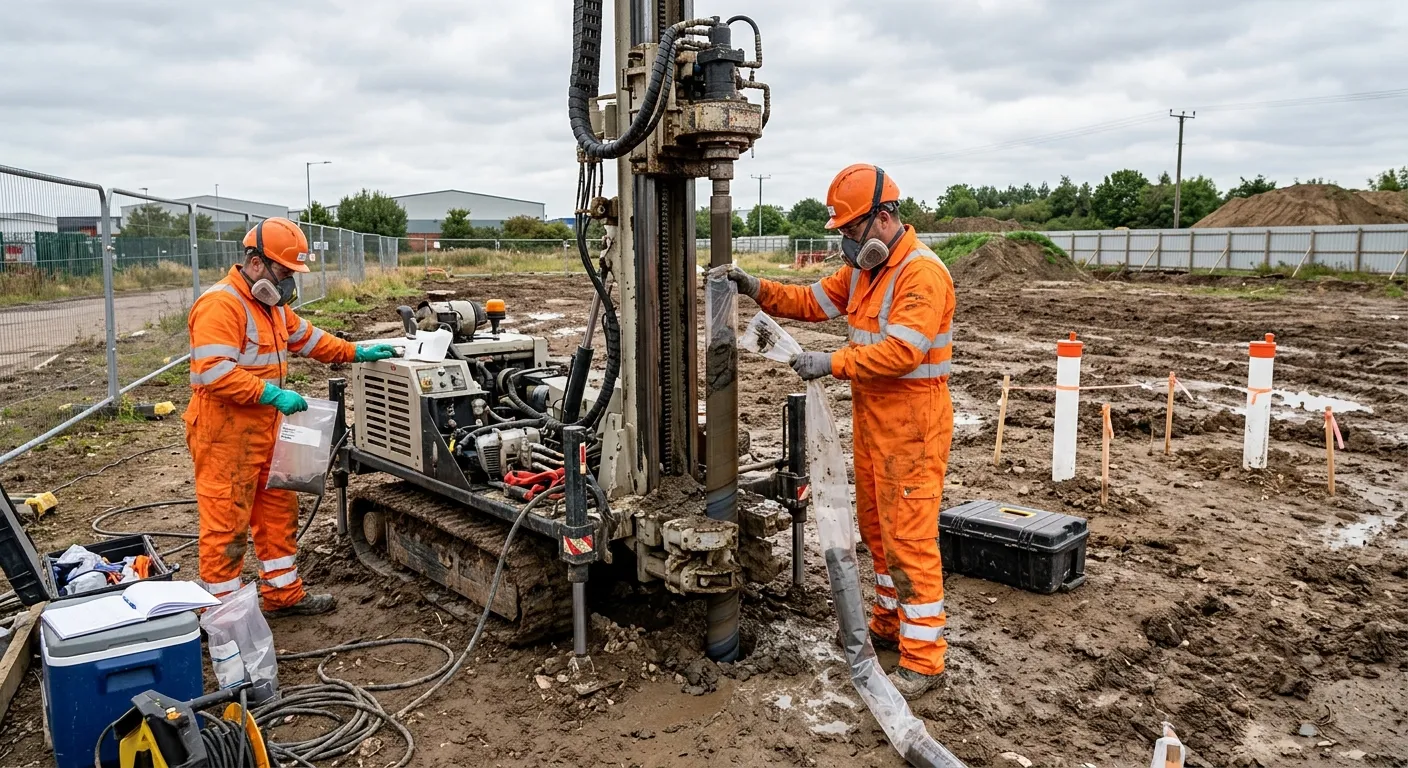
The initial challenge was the site investigation phase. A specialist team of Intrusive Investigation Operatives and Engineering Geologists was mobilised within 72 hours. Their task involved window sampling, dynamic probe drilling, and installing groundwater monitoring wells. Each operative required not only CSCS but also confined spaces certification and specific training in handling potentially explosive atmospheres (ATEX), due to historic underground structures.
Key Learning:
The rapid deployment of a correctly certified investigation team prevented a two-week delay in the project timeline, which would have incurred over £45,000 in preliminary holding costs. This underscores the financial imperative of having immediate access to a pre-vetted specialist labour pool.
The Remediation Execution: A Symphony of Specialists
Following the investigation, the main remediation phase required a tiered workforce structure:
- Earthworks & Demolition Crew (Months 1-4): A team of 12, including NPORS-certified 360 excavator operators (with endorsements for deep excavation), crusher operators, and asbestos removal licensed contractors. Strict zoning was enforced to separate"clean" and"dirty" material handling areas.
- Biological Treatment Unit Operators (Months 3-10): For the hydrocarbon contamination, a bespoke biopile system was constructed. This required two dedicated Remediation Technicians with specific training in bio-augmentation, soil turning, and monitoring parameters like temperature, moisture, and oxygen levels to optimise microbial activity.
- Groundwater Specialists (Ongoing): A Hydrogeologist and two Groundwater Pumping Operatives managed a pump-and-treat system for solvent plume control. Their expertise in interpreting real-time data from in-situ sensors was critical to regulatory compliance.
The project concluded on schedule, achieving Site Completion Criteria sign-off from the Environment Agency. The total workforce peaked at 38 specialists, all managed under a single point of contact with the staffing agency, which streamlined communication and liability.
The Technology Toolkit: Modernising Contaminated Land Work
The profile of a Contaminated Land Worker is evolving beyond physical labour. Digital fluency is becoming a core competency, enhancing safety, accuracy, and efficiency. Here’s how technology is reshaping the field:
1. Digital Site Characterization
Gone are the days of purely manual log sheets. Modern teams use ruggedised tablets running GIS (Geographic Information System) software like ArcGIS Field Maps. Workers log sample locations, observations, and photos directly onto digital maps in real-time, which sync with project managers and consultants off-site.
This eliminates data transcription errors and allows for immediate analysis of contamination patterns, enabling dynamic adjustment of excavation grids. Seeking staff comfortable with this tech is as crucial as finding a specialist for a niche technical field; it requires targeted sourcing.
2. Remote Sensing & Robotics
For initial site assessment or monitoring unsafe structures, drone (UAV) pilots with thermographic and multispectral cameras can identify heat anomalies or vegetation stress indicative of subsurface contamination. Furthermore, tethered robots or crawlers are increasingly used for preliminary inspections of highly hazardous confined spaces before human entry.
This tech reduces human exposure to risk. Hiring now may involve seeking operatives with basic drone operator certifications or a willingness to be trained in robotic asset deployment.
3. Real-Time Data Analytics
Portable X-ray Fluorescence (pXRF) analyzers and membrane interface probe (MIP) rigs provide instant, on-site contaminant concentration data. Workers trained in their use can make informed decisions immediately—for example, whether a soil pile requires further treatment or can be classified as clean.
This turns operatives into data-collection nodes, speeding up the entire decision-making cycle and reducing the time and cost associated with off-site laboratory analysis.
Navigating Financial Models & Contractual Frameworks
Understanding the cost structures and contractual obligations of hiring contaminated land staff is vital for project budgeting and risk management. The choice between temporary, contract, and permanent hires has significant financial implications.
Comparative Cost Analysis: Temporary vs. Direct Hire
| Cost Factor | Agency Temporary Worker | Directly Employed Worker |
|---|---|---|
| Gross Hourly Rate | Fully inclusive bill rate (e.g., £28-£45/hr) | Base salary + on-costs (e.g., £22/hr + ~30%) |
| Employer's Liability Insurance | Covered by Agency | Direct Cost to Company (~£5k-£15k p.a.) |
| Recruitment & Onboarding | No Cost | Advertising, Interview Time, Admin (£3k-£8k) |
| Downside Risk (Injury/Non-compliance) | Primary liability rests with the agency. | Full legal and financial responsibility rests with you. |
For project-based work, the temporary agency model often provides superior financial clarity and risk transfer. You pay a known bill rate with no hidden costs, and the agency manages the complexities of employment, from pensions (auto-enrolment) to continuous professional development (CPD) tracking for certifications.
The Importance of Clear Contractual Terms
When engaging a staffing agency, scrutinise the contractual terms. Key clauses to ensure are present include:
- Replacement Guarantee: A clause guaranteeing a free replacement worker if the supplied staff member fails to meet agreed qualifications or is unsatisfactory within a defined probation period (e.g., first 40 hours).
- Audit Rights: Your right to audit the agency’s records for supplied workers, including proof of certifications, insurance, and skills assessments.
- Step-In Rights: Provisions allowing you to directly hire a temporary worker after a predetermined period (e.g., 12 weeks) for a pre-agreed conversion fee, protecting your ability to secure exceptional talent long-term.
Strategic Insight:
The optimal staffing strategy for a large, multi-year remediation project is often a hybrid one. Use temporary agency staff for the core, variable earthworks and treatment operations to maintain flexibility. Simultaneously, directly hire or contract key supervisory staff like the Site Manager and Remediation Engineer to ensure continuity of institutional knowledge and client relationships.
The Horizon: PFAS, Microplastics & The Skills of Tomorrow
The regulatory and contaminant landscape is not static. As science advances, new substances are classified as hazardous, demanding novel remediation approaches and fresh skill sets from the workforce.
The"Forever Chemical" Challenge: PFAS
Per- and polyfluoroalkyl substances (PFAS) are emerging as a top priority for regulators worldwide. These persistent chemicals, found in firefighting foams and non-stick coatings, require highly specialised handling.
Future Contaminated Land Workers will need training in:
- Specialised Sampling Protocols: Avoiding cross-contamination during water and soil sampling for PFAS requires using specific, PFAS-free equipment (e.g., Teflon-free tubing).
- Advanced Treatment Techniques: Incineration at extreme temperatures, advanced oxidation processes, or specialised filtration (e.g., granular activated carbon, ion exchange) are common PFAS solutions. Operatives will need training in these plant operations.
- Strict PPE Regimes: Beyond standard PPE, full encapsulating suits with supplied air may be necessary for high-concentration zones, requiring additional certification in their use.
Beyond Dig-and-Dump: The Circular Economy in Remediation
The future is not just about removal, but resource recovery. The concept of"Landfill Mining" and material valorisation is gaining traction. This shifts the required skills from mere excavation to material science application.
Workers may need to operate soil washing plants that separate contaminants from reusable gravels, or manage thermal desorption units that recover hydrocarbons for energy. There will be a growing need for Environmental Laboratory Technicians on-site to conduct rapid quality checks on treated materials to verify they meet reuse specifications as clean fill or aggregate. This evolution mirrors a broader industrial trend where roles are becoming more technical and data-driven, necessitating a proactive approach to upskilling and future-proofing your labour supply chain.
Staying ahead of these trends requires a recruitment partner who doesn't just fill today's roles but anticipates tomorrow's needs. Building a relationship with an agency that invests in candidate training and has its finger on the pulse of regulatory change is no longer a luxury—it's a strategic imperative for any firm operating in the environmental remediation sector.