















Workers Direct - Industrial Production Assembler Jobs in Swindon with Manual Dexterity and Assembly Line Experience for Automotive and Electronics Sectors
Job Title: Industrial Production Assembler Jobs
Location: Swindon
Introduction
Do you have steady hands? Do you find satisfaction in seeing a complex product come together, piece by perfect piece? If you have the manual dexterity to handle intricate components and the drive to work in Swindon’s booming industrial sector, Workers Direct wants to meet you.
Let’s be honest: the world doesn't run on ideas alone. It runs on the people who actually build things. It runs on the people who can take a schematic, a handful of components, and a set of tools, and turn them into a functioning engine part or a high-tech circuit board.
At Workers Direct, we are currently recruiting for Industrial Production Assemblers for immediate starts in Swindon. We aren't looking for robots. We are looking for skilled humans who understand the nuance of the assembly line.
Whether you are a veteran of the automotive industry or you have the precision required for modern electronics, this is your guide to the role, the requirements, and how to secure your spot with top-tier employers.
The Swindon Advantage: Why Here, Why Now?
Swindon is more than just a town on the M4; it is an industrial powerhouse. Historically, this town has been the beating heart of British engineering, from the Great Western Railway to major automotive manufacturing plants.
Today, the landscape is evolving. While the giants of the past have shifted, a new network of high-tech manufacturing, automotive supply chains, and specialized electronics firms has sprung up.
For an Industrial Production Assembler, Swindon is the place to be.
- Location: Perfectly situated between London and Bristol, keeping logistics fast and jobs plentiful.
- Innovation: The "M4 Corridor" is often called Britain’s Silicon Valley. We are seeing a massive uptake in electronics manufacturing jobs here.
- Stability: The demand for physical goods—car parts, sensors, control units—is stable. These aren't jobs that can easily be done remotely via Zoom. They need you, on the floor, making it happen.
The Role: What Does a Production Assembler Actually Do?
If you check generic job boards, you’ll see bullet points that say "assemble products." But at Workers Direct, we know the job is much more than that. It is a role that combines physical rhythm with mental focus.
You will be the heartbeat of the factory floor.
1. The Automotive Sector
In this sector, you are likely dealing with larger, more robust components. This isn't usually building a whole car from scratch; it’s often sub-assembly. You might be assembling:
- Dashboard control units.
- Engine manifolds or braking systems.
- Internal trim and seating mechanisms.
The Vibe: It’s often fast-paced, relies on torque tools and pneumatic drivers, and safety is the absolute priority. You need to be comfortable with a bit of noise and the feeling of heavy industry.
2. The Electronics Sector
This is the other side of the coin. Here, the components shrink down. You aren't using a hammer; you're using tweezers and soldering irons. You might be working on:
- Populating Printed Circuit Boards (PCBs).
- Assembling handheld scanners or medical devices.
- Wiring complex looms for aerospace or communications.

The Vibe: These environments are often "Clean Rooms." They are quiet, temperature-controlled, and require an immense amount of patience. You’ll be wearing anti-static straps (ESD protection) and likely using magnifying equipment.
The "Secret Sauce": Manual Dexterity
We mention "Manual Dexterity" in our job title for a reason. It is the single most important trait for this role.
But what does it actually mean in a practical sense?
It means the ability to make coordinated hand and finger movements to grasp and manipulate objects. It’s not just about having "good hands"; it’s about the connection between your eyes and your fingers.
- Can you thread a screw that is 3 mm wide into a hole without cross-threading it?
- Can you apply exactly 15 Newtons of force to a clip without snapping it?
- Can you solder a joint without bridging the connection?
If you have hobbies like fixing watches, building PC rigs, model making, or even knitting, you likely have the manual dexterity we need. We can teach you the specific factory processes, but we can't teach you steady hands.
Key Responsibilities & Daily Tasks
When you clock in for a shift arranged by Workers Direct, what does your day look like?
1. Blueprint and Schematic Reading
You won't always be told what to do verbally. You will often have a work instruction sheet or a technical drawing. You need to be able to look at a diagram and translate that into the object in front of you.
2. Tool Operation
You will become a master of your toolkit. This includes:
- Hand Tools: Screwdrivers, pliers, wire strippers, crimping tools.
- Power Tools: Pneumatic drills, rivet guns, soldering stations.
- Measurement Tools: Calipers and gauges to ensure tolerances are within 0.1 mm.
3. Quality Assurance (Self-Inspection)
In modern manufacturing, Quality Control isn't just for the manager at the end of the line. You are the first line of defense. You need to check your own work. If a part doesn't click, snap, or fit correctly, you need the integrity to stop, flag it, and fix it.
4. Line Flow and Timing
Assembly lines work on "Takt Time"—the average time between the start of production of one unit and the start of the next. If the Takt Time is 45 seconds, you cannot take 50 seconds. You need to find a rhythm that is efficient but safe.
Required Skills and Qualifications
We try to keep barriers to entry reasonable, but our clients in Swindon have specific standards.
The "Must-Haves"
- Proven Assembly Experience: Ideally, at least 6 months to 1 year in a manufacturing environment.
- Manual Dexterity: As discussed, this is non-negotiable.
- Physical Stamina: You may be standing for 8-hour or 12-hour shifts.
- Teamwork: You are a link in a chain. If you are difficult to work with, the chain breaks.
The "Nice-to-Haves"
- IPC Certification: For electronics roles, having IPC-A-610 training (Acceptability of Electronic Assemblies) will put you at the top of the pile.
- Forklift License: Sometimes assemblers need to move their own stock.
- Soldering Skills: Through-hole or Surface Mount (SMT) experience.

Health and Safety: Non-Negotiable
We take the safety of our workers seriously. Before you step onto a client site, you need to understand the basics.
Manufacturing environments can be hazardous if you aren't paying attention.
- PPE: You must be willing to wear safety boots (steel toe), high-vis vests, safety glasses, and in some cases, hearing protection.
- ESD Safety: In electronics, you must wear grounded wrist straps to prevent static electricity from frying expensive chips.
- COSHH: Understanding how to handle adhesives, solvents, or lubricants safely.
For a deeper dive into UK safety standards, we always recommend candidates familiarize themselves with the Health and Safety Executive (HSE) guidelines on manufacturing.
Why Choose Workers Direct?
You have options. There are plenty of agencies. Why use us?
1. We are Human-Centric
We don't use AI to scan your CV and reject you if you miss one keyword. We read your application. We talk to you. We understand that a resume doesn't tell the whole story of your work ethic.
2. Local Knowledge
We know Swindon. We know which bus routes get you to the industrial parks in Blagrove or Dorcan. We know which canteens serve the best breakfast. We are plugged into the local ecosystem.
3. Temp-to-Perm Opportunities
Many of the roles we advertise start as temporary contracts. However, 70% of our successful candidates in the manufacturing sector are offered permanent contracts after a 12-week probation period. We are a gateway to a permanent career.
4. Fast Payments
We know that waiting for money is stressful. We have streamlined payroll systems to ensure you are paid correctly and on time, every time.
Salary Expectations in Swindon
What is the financial outlook for an Industrial Assembler?
- Entry Level: £11.44 - £12.50 per hour.
- Experienced / Specialized (e.g., Soldering): £13.00 - £16.00 per hour.
- Shift Premiums: Night shifts often attract a premium of 20% to 33%.
- Overtime: Usually paid at time-and-a-half (1.5×) or double time (2×) for Sundays.
A Day in the Life: Meet "Alex"
To give you a real feel for the job, let's look at a typical day for Alex, one of our assemblers working at an automotive supply plant in Swindon.
- 05:45: Alex arrives, puts on safety boots and high-vis. Clocks in.
- 06:00: Shift briefing. The Team Leader discusses the target: 450 units today.
- 06:15: Alex takes his station. He is assembling the housing for a car’s side-mirror. It involves three screws, a plastic clip, and connecting a small wire for the electric motor.
- 09:00: Break time. 15 minutes.
- 09:15: Back on the line. The pace picks up. Alex gets into a "flow state"—music isn't allowed for safety, but he has a mental rhythm. Grab, click, drill, check, pass.
- 12:00: Lunch.
- 12:30: Rotate stations. To prevent Repetitive Strain Injury (RSI), the team swaps roles. Now Alex is on "Final Check," inspecting the finished mirrors for scratches.
- 14:00: Final push. They are at 400 units.
- 14:30: Clean down. Every tool goes back in its shadow board. The floor is swept.
- 15:00: Clock out. Job done.

Preparing for the Interview
If you apply through Workers Direct and we invite you for an interview or a trial shift, here is how to impress us.
- Showcase Dexterity: If we ask you to perform a small test (like screwing nuts onto bolts), focus on accuracy first, speed second. Speed comes with time; accuracy is a mindset.
- Dress the Part: You don't need a suit. Smart casual is fine, but if you have safety boots, wear them. It shows you are ready to start immediately.
- Be Honest about Gaps: If you haven't worked in a year, tell us why. We appreciate honesty more than a made-up story.
- Highlight Reliability: In assembly, if you are late, the line stops. Give us examples of your punctuality in previous roles.
The Future: Automation vs. Humans
A common fear is that robots are taking these jobs. While automation is increasing in Swindon’s factories, the need for human assemblers is actually evolving, not disappearing.
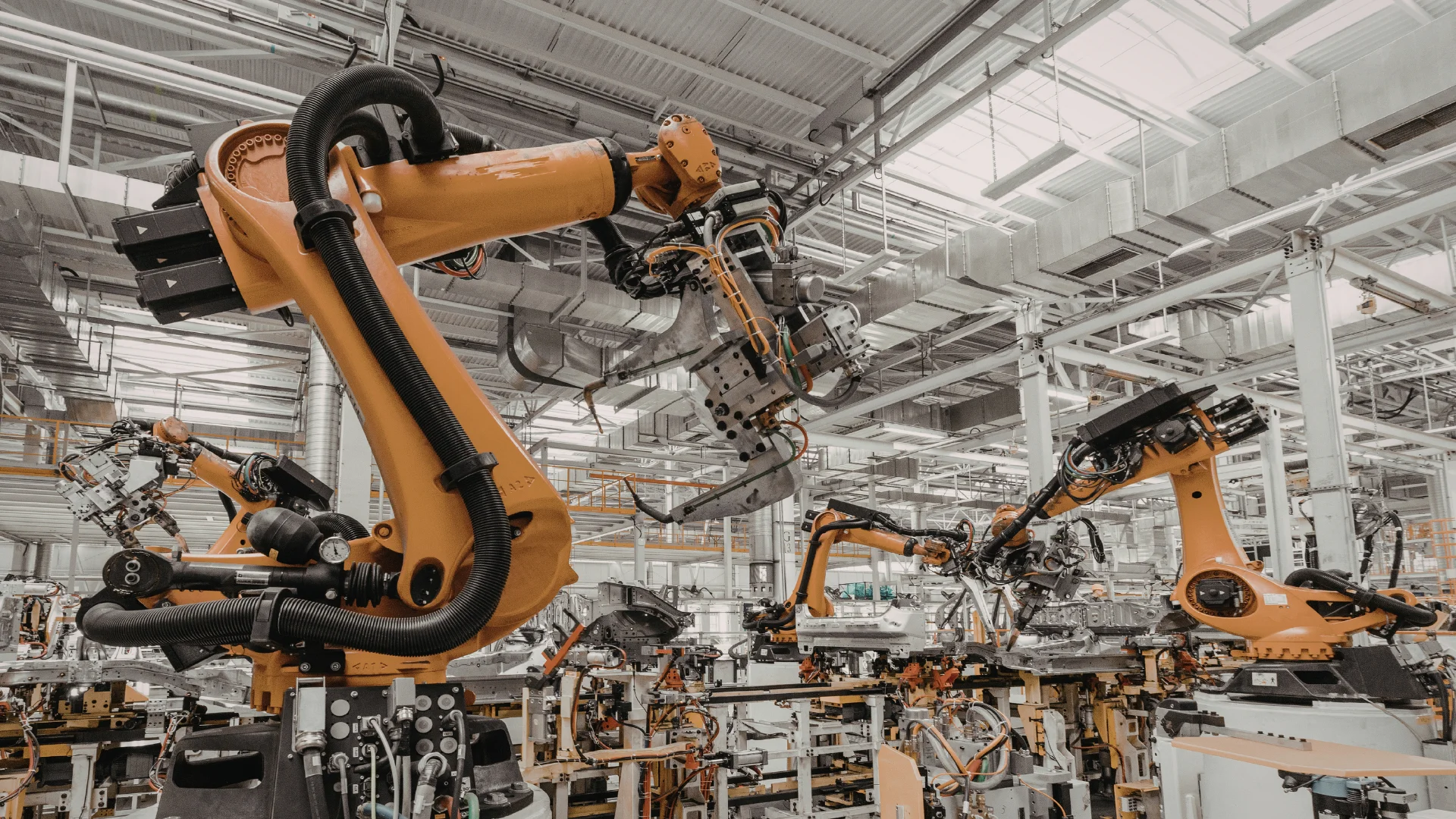
Robots are great for heavy lifting and welding. They are terrible at handling flexible cables, spotting subtle cosmetic defects, or adapting to a sudden change in product design. The "Industrial Production Assembler" of the future is a hybrid worker—someone who works alongside machines, feeding them, checking them, and doing the intricate finish work that a robot hand is too clumsy to manage.
By joining the industry now, you position yourself to learn these systems and upskill into machine operation or maintenance.
Conclusion: Let's Get to Work
If you have read this far, you clearly have the attention to detail we are looking for.
The role of an Industrial Production Assembler in Swindon is challenging, honest work. It requires focus, good hands, and a reliable character. In return, it offers a steady income, a chance to work with cutting-edge automotive and electronic technology, and a clear path to career progression.
At Workers Direct, we are ready to help you take that step. We have the connections, the knowledge, and the desire to see you succeed.
Don't let your skills sit idle.
Visit workers-direct.com today. Browse our jobs, upload your CV, or give our team a call. The assembly line is moving—make sure you're on it.
Frequently Asked Questions (FAQs)
1. Do I need a specific degree or education to apply?
No, a university degree is not required for Industrial Production Assembler roles. Most employers prioritize experience and attitude. However, having GCSEs in Maths and English (Grade C/4 or above) is beneficial because you will need to count stock and read work instructions. For electronics roles, any vocational certification in engineering or electronics is a huge plus.
2. What is the difference between "Assembly" and "Manufacturing"?
Great question. Manufacturing is the broad term for the entire process of making goods from raw materials. Assembly is a specific part of manufacturing where pre-made parts are put together to form the final product. As an assembler, you aren't usually melting metal or molding plastic; you are taking those finished parts and building the final unit.
3. I have assembly experience, but not in Automotive or Electronics. Can I still apply?
Absolutely. We look for transferable skills. If you have assembled furniture, worked in packaging, or done mechanical repairs, you likely have the manual dexterity and process-driven mindset required. When you apply at Workers Direct, make sure to highlight any role where you worked with your hands or used tools.
4. Are these jobs suitable for people with no car?
Yes, many of them are. Swindon has a robust bus network (Swindon's Bus Company and Stagecoach) that services the major industrial areas like Dorcan, Groundwell, and South Marston. However, some shifts (like 6am starts or 10pm finishes) can be tricky with public transport. We always check your location and transport options before matching you with a specific employer to ensure you can get there easily.
5. What happens during a "Trial Shift"?
Some employers in Swindon prefer a trial shift before offering a contract. This usually lasts 2 to 4 hours. During this time, they aren't expecting you to be perfect. They are watching for:
- Listening skills: Do you follow instructions?
- Safety awareness: Are you looking out for hazards?
- Dexterity: Can you handle the parts without dropping them?
- Attitude: Are you asking questions and showing interest?
Think of it as a practical interview. Relax, focus, and do your best.