













Hire Elite Rough Terrain Forklift Operators: Secure Your Site & Boost Productivity
Discover the definitive 2026 guide to sourcing, vetting, and retaining certified Rough Terrain Forklift Operators to drive efficiency on challenging construction and industrial sites.
Hire Staff In Southwark Today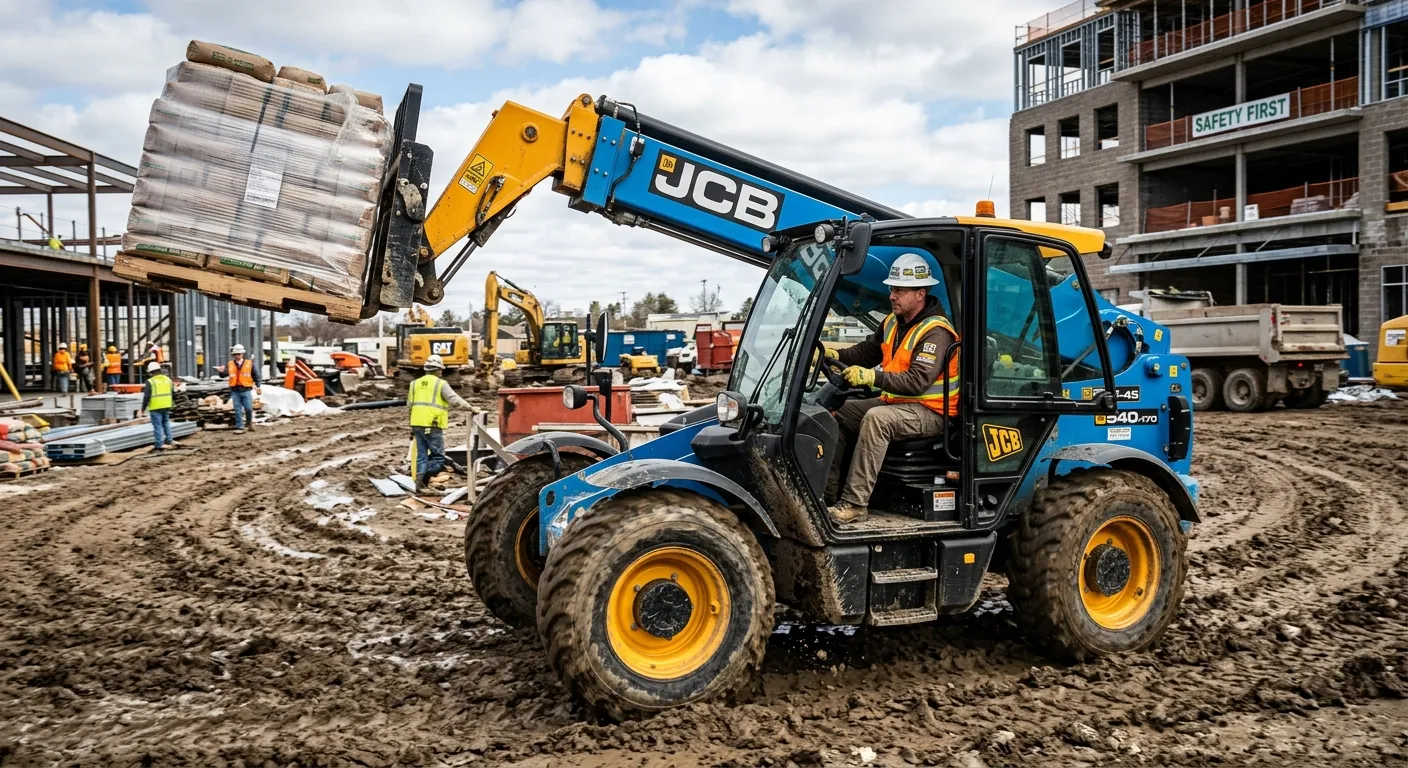
The Complete Guide to Rough Terrain Forklift Operations
Rough Terrain Forklift Operators are specialized professionals who operate heavy-duty forklifts designed for unstable, uneven ground commonly found on construction sites, lumber yards, and agricultural projects. Unlike their warehouse counterparts, these operators must master machine stability, load management on slopes, and navigate unpredictable surfaces.
Core responsibilities extend beyond simple lifting. They perform pre-operational safety checks, understand load charts for telehandlers, coordinate with ground crews using hand signals and radios, and are often responsible for basic maintenance and fault reporting. Their role is critical to the logistical flow of materials on site, impacting everything from foundation work to finishing stages.
In high-pressure environments like those we support for Immediate Start Construction Jobs in Bradford, a skilled operator doesn't just move pallets—they become a pivotal part of the site's safety and efficiency ecosystem.
Securing a top-tier operator requires verification of both hard and soft skills. The non-negotiable certification is the CPCS (Construction Plant Competence Scheme) or NPORS (National Plant Operators Registration Scheme) card for Rough Terrain Forklifts. This proves formal training and assessed competence.
- Advanced Spatial Awareness: Judging distances and clearances with large, extended loads.
- Risk Assessment Proficiency: Continuously evaluating ground conditions and overhead hazards.
- Mechanical Aptitude: Identifying early signs of mechanical issues to prevent downtime.
- Communication & Teamwork: Clear, concise coordination with slingers and site managers.
Our Candidate Screening & Selection process is rigorously tailored to validate these competencies, going beyond certificate checks to include practical scenario-based questioning.
Hiring in-house for such a specialized role can be time-consuming and risky. A strategic partnership with a specialized agency provides immediate access to a vetted talent pool. The most effective strategy combines speed with rigor.
Leverage agencies that specialize in construction and industrial staffing. For instance, when you need to Hire Staff In Southwark, partnering with a provider who has local knowledge and a ready network is crucial. The process should include verified certification checks, reference validation from previous site managers, and ideally, a short practical assessment or detailed interview focusing on past site-specific challenges.
Integrating modern Future-Proof Candidate Screening Strategies For 2026 ensures you're not just filling a seat, but acquiring an asset who can adapt to new technologies like telematics and advanced load management systems.
Why Elite Rough Terrain Forklift Operators Are a Strategic Investment
Dramatic Risk Reduction
Certified operators are trained in advanced stability principles, pre-use inspections, and hazard perception. This directly reduces the likelihood of costly tip-overs, load drops, and site incidents, protecting your workforce, assets, and insurance premiums.
Maximised Site Productivity
Expert operators work efficiently, planning optimal travel paths, minimizing idle time, and handling materials correctly the first time. This keeps critical path construction activities on schedule and prevents bottlenecks that can delay entire projects.
Equipment Longevity & Cost Control
Skilled operators reduce wear and tear through smooth operation and proactive reporting of minor issues before they become major repairs. This extends the lifespan of high-value capital equipment and controls maintenance budgets, a key consideration detailed in our Hiring Cost Calculator.
The 2026 Hiring Blueprint for Rough Terrain Forklift Operators
The landscape for hiring skilled industrial talent is evolving rapidly. Relying on outdated job boards is insufficient. A multi-channel, verification-heavy approach is now standard for securing operators who can truly perform under pressure.
1. Defining Your Exact Requirements
Before posting a job, specificity is key. Beyond"CPCS Operator," define:
- Machine Type: Telehandler (with specific reach), Straight Mast Forklift, Rotating Telehandler?
- Site Conditions: Extreme slopes, deep mud, confined spaces?
- Material Types: Bricks, steel beams, roofing bundles, timber?
- Contract Duration: Is this a short-term peak demand role or a long-term project position? Understanding this helps tap into the right talent pool, much like we do for Warehouse Jobs in Luton where needs fluctuate.
2. Strategic Sourcing Channels
Exclusive reliance on generic job boards yields generic candidates. Leading agencies utilize:
- Specialist Plant Operator Networks: Direct relationships with training schools and assessors.
- Industry-Specific Platforms: Niche job boards focused on construction and civil engineering.
- Verified Talent Databases: Pre-vetted pools of operators whose skills and documents are continuously updated. This is a core component of our Staffing Services for the industrial sector.
Pro-Tip: The Practical Assessment
Whenever possible, incorporate a supervised practical test. This doesn't need to be a full day; a 30-minute assessment on a simulated uneven surface with a standard load can reveal more about an operator's skill and calmness under pressure than any interview. This mirrors the hands-on verification we advocate in our guide on Mastering Talent Sourcing.
3. Compliance & Onboarding Excellence
Hiring is only the first step. Ensuring full compliance and rapid integration is critical.
All operators must have valid, in-date CPCS/NPORS cards, a current CSCS card (often required for site access), and proof of relevant health & safety training (e.g., SSSTS or similar). A rigorous agency will manage this verification digitally. Efficient onboarding then ensures the operator understands your site's specific safety rules, traffic management plans, and key contacts from day one. For insights on streamlining this phase, review our resource on Onboarding New Employees.
Expert Insight: What Employers Really Look For
Understanding the employer's perspective is crucial for both hiring managers and job seekers. This video breaks down the essential skills and mindset that set elite operators apart on a live site.
Managing & Retaining Your Rough Terrain Forklift Operators
Acquiring talent is one challenge; retaining it is another. High-caliber operators are in constant demand. Creating an environment where they feel valued, safe, and engaged is key to long-term retention and avoiding costly re-hiring cycles.
Fostering a Culture of Safety & Respect
Operators are not just"machine drivers"; they are skilled technicians. Involve them in daily site safety briefings, solicit their feedback on ground conditions and logistics, and recognize their expertise. A culture that prioritizes safety above arbitrary speed metrics reduces turnover.
Provide clear paths for upskilling, such as training for additional plant categories (like Scaffolding Erector roles often require similar site awareness) or leadership roles like banksman/slinger supervisor.
The Cost of Poor Retention
Replacing a skilled operator involves:
- Recruitment agency fees or internal HR time.
- Project delays during the vacancy.
- Onboarding and site-specific training time.
- Increased risk of incidents with a new, unfamiliar operator.
Investing in retention through competitive pay, respect, and clear communication is always more cost-effective than constant re-hiring.
Leveraging Flexible Staffing Models
Not every project requires a permanent, full-time operator. Flexible staffing through a trusted agency allows you to scale your plant operator workforce up or down based on project phases, seasonal demand, or specific short-term contracts. This model provides access to expertise without long-term overhead, similar to solutions for Temporary Admin Staff in Harrow. It also allows you to"try before you buy" – a temporary operator can be offered a permanent role if they prove to be an exceptional fit for your team.
Frequently Asked Questions: Rough Terrain Forklift Operators
The core difference lies in the machine design, operating environment, and required skills. Rough Terrain forklifts have large, pneumatic tires, a higher ground clearance, and a more robust chassis for uneven ground. They often have 4-wheel drive and steering. Operationally, a Rough Terrain Operator must be certified for outdoor, unstable conditions, understand load stability on slopes, and navigate live construction sites with multiple hazards. A warehouse operator typically works on smooth, level concrete indoors. The certifications are not interchangeable.
With a specialized agency that maintains a live pool of vetted candidates, you can often secure a fully compliant operator within 24-48 hours for urgent needs. The speed depends on the specificity of your requirements (e.g., telehandler with a 12m reach) and location. For example, to Hire Staff In Southwark, an agency with a strong London network will be fastest. The process involves matching your needs, confirming the operator's immediate availability, and conducting a final verification check. Explore our guide on How to Optimize Hire Employees for more on streamlining this timeline.
Pay rates vary significantly based on location, project type, contract duration (temp vs. perm), and machine specialization. As a 2026 benchmark, expect competitive hourly rates for temporary operators to reflect high demand and specialized skill sets. Permanent salaries will include additional benefits. For accurate, localized planning, always consult current market data or use tools like our WAREHOUSE SALARY CALCULATOR as a starting point, though remember industrial plant roles often command a premium.
Absolutely. This is a highly effective and low-risk recruitment strategy. Hiring a temp operator allows you to assess their skills, attitude, and team fit in a real-world setting over a contracted period. If they excel, you can then offer them a permanent position directly. This"try before you buy" model saves on bad hire risks and is a common pathway we facilitate. It aligns with the flexible workforce strategies discussed in Mastering Temp Job Agencies.
Ready to Secure Your Site with Elite Operators?
Stop letting staffing delays and skill gaps hold your project back. Connect with our specialist team today and access a fully vetted network of certified, reliable Rough Terrain Forklift Operators available for immediate deployment.
Need to Hire Staff In Southwark or across the UK? Our localized expertise ensures you get the right fit, fast. Discover how we deliver.
Case Study: Navigating a Tight-Space Demolition Project
Theory meets practice on the live site. This real-world example illustrates how an elite operator’s skills directly translated into project success and cost savings, highlighting the tangible ROI of expert hiring.
The Scenario: Precision in Confinement
A major refurbishment project in central London required the careful internal demolition of a 1960s concrete structure. The site was tightly bound by occupied buildings on three sides, with a narrow, 3.5-meter alley as the only access point for plant. The critical task: removing over 200 cubic meters of fractured concrete and steel reinforcement from the basement level.
A standard telehandler could not fit. The solution required a compact, rotating telehandler (a"Roto") operated by a specialist with exceptional precision. The operator needed to work within millimetres of existing services, lift awkward loads from a deep pit, and place them onto waiting trucks in the alley—all while coordinating with a demolition team via radio in a high-noise environment.
The Operator's Impact:
- Pre-Operation Planning: The operator spent the first hour with the site manager reviewing load charts, assessing ground bearing pressure in the basement, and planning the exact swing radius to avoid a fragile party wall.
- Adaptive Technique: When encountering an unexpected steel beam tangled in rubble, they suggested a slight re-sequencing of the lifts to free it safely, preventing a 4-hour delay a less experienced operator might have caused.
- Efficiency Gain: By perfectly positioning each load on the truck, they maximized space, reducing the required number of truck rotations from an estimated 12 to just 9, saving significant transport costs.
Project Outcome
Time Saved: 2 days against schedule.
Cost Avoided: ~£4,800 in potential damage/redesign.
Safety Record: Zero incidents or near-misses.
Client Feedback:"The operator wasn't just a driver; they were a solutions partner."
This case underscores why vetting for problem-solving and site-specific experience is as crucial as checking certifications. It mirrors the depth of assessment we apply across all roles, from Construction Labourers in Manchester to specialist plant operators.
The 2026 Operator: Integrating Telematics & Data-Driven Operation
The role is becoming increasingly tech-integrated. Modern rough terrain forklifts are equipped with telematics systems that monitor everything from fuel consumption to hydraulic pressure. The elite operator of today and tomorrow doesn't just operate the machine; they interact with this data to drive further efficiencies.
From Levers to Logs: Operator as Data Analyst
Telematics dashboards provide real-time feedback. A skilled operator can use this to:
- Optimize Hydraulic Usage: Avoiding excessive"racing" of the engine when lifting, which reduces fuel costs and wear.
- Pre-Emptive Maintenance Alerts: Noticing a slight drop in hydraulic pressure reported on the in-cab display and reporting it immediately, triggering a maintenance check that prevents a major cylinder failure.
- Idle Time Management: Self-auditing their own idle time percentages to improve site productivity, a key metric for site managers.
During the hiring process, probing an operator's familiarity with brands like John Deere, JCB, or JLG telematics systems can be a differentiator. This technical literacy is a forward-looking skill we evaluate, similar to how we assess tech aptitude for Office Admin Staff in Wembley.
The Future: Automated Assistance Systems
New models are featuring load moment indicators, automatic levelling systems, and even proximity sensors. The operator's role evolves from pure manual control to supervising and overseeing these systems, requiring a deeper understanding of the machine's logic.
A hiring strategy for 2026 and beyond must consider an operator's adaptability to technology. Ask questions like:"Have you used a machine with an advanced Load Moment Indicator? How did it change your approach to a complex lift?" This probes for continuous learning, a trait detailed in our resource on Future-Proof Screening.
Mastery of Attachments: Expanding Operational Value
A basic fork carriage is just the beginning. The true value of an experienced operator often lies in their competence with specialized attachments, which can turn a single machine into a multi-tool, reducing the need for additional plant on site.
| Attachment | Common Use Case | Operator Skill Required | Impact on Project Efficiency |
|---|---|---|---|
| Brick & Block Grab | Unloading and precisely placing packs of bricks or blocks for masons. | Delicate control to avoid damaging materials; understanding of pack stability. | Eliminates manual handling, speeds up wall construction by 30-40%. |
| Rotating Fork Carriage | Working in confined spaces, positioning loads at precise angles without maneuvering the entire machine. | Advanced spatial reasoning, coordination of multiple control functions simultaneously. | Enables work in otherwise inaccessible areas, preventing project redesigns. |
| Hook Arm & Winch | Recovering bogged-down vehicles, placing large drainage pipes or culverts. | Understanding of dynamic loads, winch line management, and rigging principles. | Replaces need for a separate recovery truck or crane, saving time and rental costs. |
When specifying your hiring needs, listing required attachment competencies can drastically improve candidate suitability. An operator certified on a telehandler with a brick grab is a different profile than one only experienced with standard forks. This level of detail in job specs is a hallmark of effective talent sourcing, whether for a Rough Terrain Forklift Operator or a Warehouse Team Leader in Wembley.