

















Hire Elite Help Desk Analyst Remote Talent: Build Your 2026 IT Support Team
Discover the definitive guide to sourcing, hiring, and managing top-tier remote help desk analysts. From vetting technical skills to fostering a productive virtual environment, learn the strategies that leading companies use to secure reliable IT support and drive operational continuity. Ready to hire? Post your remote help desk job today and connect with vetted professionals.
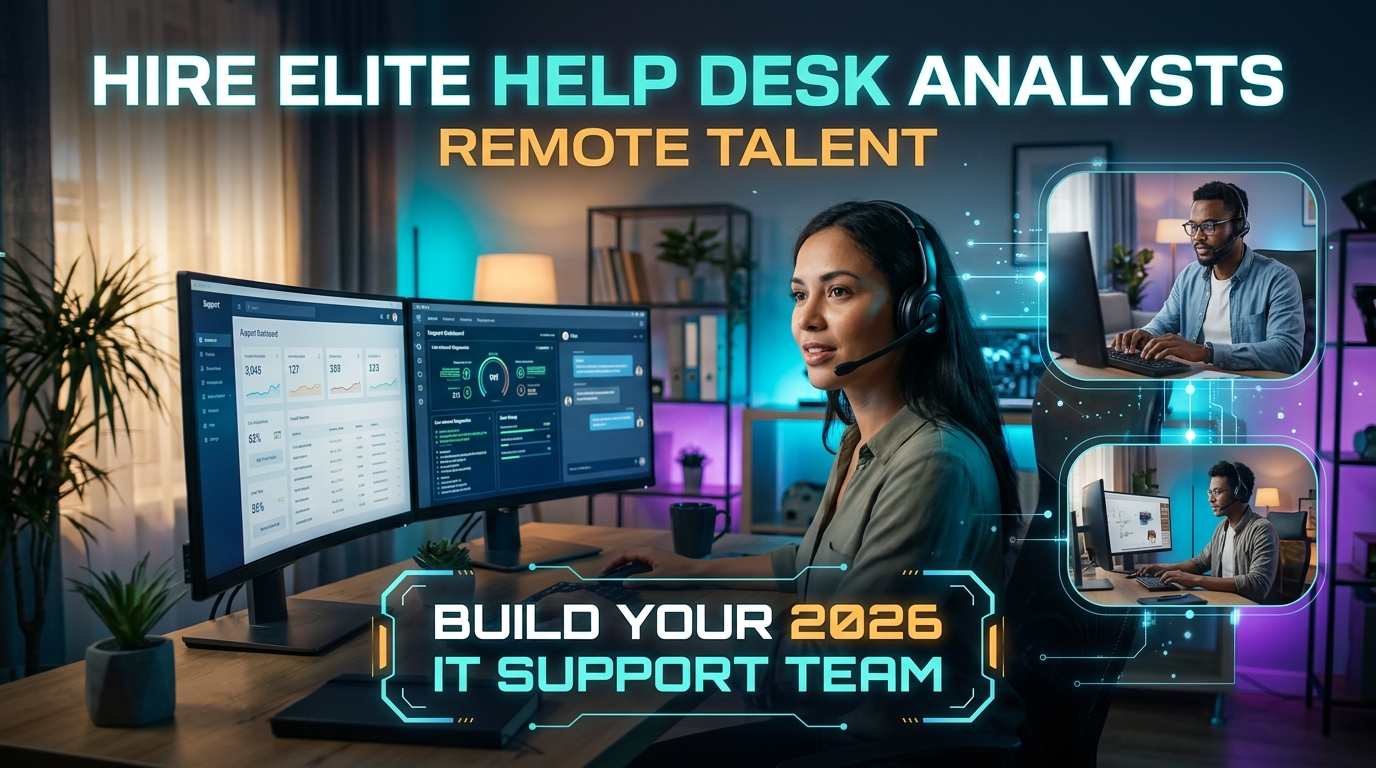
The Remote Help Desk Landscape: A Strategic Overview
Navigating the world of remote IT support requires understanding different models and roles. Use the tabs below to explore the core pillars of building a successful remote help desk function.
What Does a Remote Help Desk Analyst Actually Do?
Far more than just password resets, the contemporary Help Desk Analyst Remote role is a strategic frontline position. They are the primary point of contact for all IT-related issues, requiring a blend of deep technical knowledge, exceptional communication skills, and emotional intelligence to troubleshoot problems users may struggle to articulate. Their key responsibilities include:
- First-line technical support via phone, chat, email, and remote desktop software.
- Incident logging, tracking, and management using IT Service Management (ITSM) platforms like ServiceNow or Jira.
- User account management (onboarding/offboarding, permissions).
- Basic network troubleshooting and software/hardware installation guidance.
The shift to remote work has elevated the need for analysts who are self-starters, proficient with cloud-based collaboration tools (Teams, Slack, Zoom), and capable of maintaining focus and professionalism outside a traditional office. This role is critical for business continuity, much like how reliable props handlers are essential for event operations, ensuring the show goes on without technical hiccups.
Why Invest in a Remote Help Desk Analyst?
Building or augmenting your IT support with remote talent isn't just a trend—it's a strategic business decision with measurable benefits. Explore the key advantages below.
Access to a Global Talent Pool
Break free from geographical constraints. Hire the best candidate for the job, not just the best candidate within a 30-mile radius. This is particularly valuable for niche technical skills or out-of-hours support coverage across time zones.
Significant Cost Reductions
Reduce or eliminate overheads associated with physical office space, utilities, and on-site equipment. Many remote analysts use their own dedicated workspace. You can model potential savings with tools like our hiring cost calculator.
Increased Productivity & Continuity
Studies consistently show remote workers are often more productive with fewer distractions. Furthermore, a distributed team is inherently more resilient to local disruptions (e.g., transport strikes, weather), ensuring business continuity. This reliability is as crucial for IT as it is for securing agency staff for events to guarantee seamless operations.
Flexible & Scalable Staffing
Easily scale your support team up or down based on project demands, seasonal peaks, or business growth. The temporary-to-permanent model is highly effective here, allowing you to evaluate performance before making a permanent offer—a strategy explained in our video "How Temp-to-Perm Reduces Hiring Risk."
Improved Employee Retention
Offering remote work is a powerful perk that boosts job satisfaction and loyalty. It demonstrates trust and accommodates diverse lifestyles, leading to lower turnover and the preservation of valuable institutional knowledge within your support team.
Enhanced Service Coverage
Provide extended or 24/7 support coverage more efficiently by leveraging analysts in different time zones, all without asking staff to work unsociable night shifts. This creates a seamless support experience for your users, regardless of when they need help.
Essential Skills Checklist: What to Look For When You Hire
A successful Help Desk Analyst Remote candidate must possess a balanced mix of hard and soft skills. Technical knowledge can be taught, but intrinsic soft skills are often what separate good analysts from great ones.
Technical Competencies (Hard Skills)
- Operating Systems: Proficiency in Windows 10/11, macOS, and basic Linux command line.
- Microsoft 365 / Google Workspace Admin: User management, license allocation, SharePoint/Drive basics.
- Network Fundamentals: Understanding of TCP/IP, DNS, DHCP, VPNs, and Wi-Fi troubleshooting.
- Hardware Support: Ability to guide users through peripheral setup (printers, scanners, headsets).
- Active Directory / Azure AD: Core user account lifecycle management.
- Remote Support Tools: Experience with AnyDesk, LogMeIn, or similar.
Critical Soft Skills & Attributes
- Empathetic Communication: The #1 skill. Can they explain complex issues simply and calmly?
- Proactive Problem-Solving: Do they just follow scripts, or do they think critically to find root causes?
- Time Management & Self-Discipline: Essential for remote work success.
- Written Communication Excellence: Tickets, emails, and chat messages must be clear, professional, and grammatically correct.
- Collaboration & Teamwork: Willingness to escalate appropriately and share knowledge.
Vetting for this combination requires a structured process. We recommend integrating the principles from our candidate screening & selection page into your hiring workflow to ensure no critical attribute is missed.
Sample Interview Questions for a Remote Help Desk Analyst
Technical Scenario:
"A user calls saying they can't connect to the corporate VPN from their home laptop. They have internet access. Walk me through your diagnostic steps."
What to listen for: A logical, tiered approach (check credentials, VPN client status, firewall/antivirus settings, network adapter).
Remote Work Scenario:
"Describe your home office setup. How do you minimize distractions and maintain a professional environment during calls?"
What to listen for: Evidence of preparation, dedicated workspace, and strategies for focus.
Communication Scenario:
"How would you explain how to clear a browser cache to a frustrated, non-technical user over the phone?"
What to listen for: Patience, use of simple analogies, step-by-step instruction without jargon.
Frequently Asked Questions: Help Desk Analyst Remote Roles
Get clear, actionable answers to the most common questions about hiring and managing remote IT support staff.
Salaries vary based on experience, specific technical skills (e.g., cloud certifications), and location (London weighting often applies even remotely). As of 2026, entry-level (Tier 1) remote analysts can expect £22,000 - £28,000. Experienced Tier 2 analysts or those with specialisms can command £30,000 - £40,000. Senior analysts or team leads may earn £45,000+. For precise budgeting, always factor in the total cost of employment, which includes software licenses, training, and potential agency fees if using a service like our temporary IT staffing.
Data security is paramount. Mandatory measures include: 1) A robust VPN for all company system access. 2) Multi-Factor Authentication (MFA) on all accounts. 3) Provision of company-managed, encrypted laptops with remote wipe capabilities. 4) Clear, signed IT security policies and regular training. 5) Use of principle of least privilege (PoLP) for system access. Many of these technical safeguards are similar to those required when hiring for other sensitive roles, ensuring a consistent security posture across your organization.
Absolutely. Temporary and contract remote help desk roles are increasingly common for covering maternity/paternity leave, specific projects, seasonal spikes in ticket volume, or as a"temp-to-perm" trial period. This model offers excellent flexibility. The process for booking temporary IT staff is streamlined through agencies. You can learn more about the general process in our guide on how to book temporary staff quickly, which applies equally to IT support as it does to warehouse or event staff.
The primary challenges are communication, team cohesion, and performance visibility. Without casual office interactions, miscommunication can occur more easily. Building team culture requires deliberate effort via virtual social events and collaborative channels. Monitoring performance purely by metrics can miss qualitative aspects. The solution lies in a combination of excellent tools (like shared dashboards), regular one-to-one video calls focused on development, and fostering an environment of open feedback. These HR solutions for talent acquisition and management are key to overcoming these hurdles.
The timeline depends heavily on your recruitment method. A traditional DIY hiring process—writing a job ad, posting on boards, screening CVs, conducting multiple interview rounds—can easily take 6-8 weeks. By partnering with a specialized staffing agency that maintains a pre-vetted talent pool, this timeline can be compressed to under 2 weeks, and for urgent cover, sometimes within 24-48 hours. This mirrors the rapid placement capability seen in other sectors, such as finding immediate start warehouse staff. The key is having access to ready-to-work, qualified candidates.
Ready to Build Your Elite Remote Support Team?
Stop spending weeks sifting through unvetted CVs. Leverage our expertise in IT recruitment and extensive network of pre-screened, remote-ready help desk professionals. Whether you need temporary cover, a temp-to-perm trial, or a direct permanent hire, we streamline the process from start to finish.
Have a specific question? Our specialist IT recruitment consultants are here to help you design the perfect remote support solution for your business.