
















Workers Direct Skilled Residential Groundworkers Needed for Housing Projects in Swindon

The construction industry in Swindon is experiencing a significant boom, and there's never been a better time for skilled residential groundworkers to find rewarding employment opportunities. With housing developments expanding across the region and demand for quality construction at an all-time high, Workers Direct is actively seeking experienced groundworkers to join thriving projects throughout Swindon and the surrounding areas.
If you're a groundworker looking for your next opportunity—or perhaps you're considering entering this essential trade—this comprehensive guide will walk you through everything you need to know about groundwork positions in Swindon's residential housing sector.
Understanding the Role of Residential Groundworkers
Groundwork forms the absolute foundation of any construction project, quite literally. As a residential groundworker, you're responsible for preparing sites before the actual building work begins. It's one of those jobs that doesn't always get the spotlight, but without skilled groundworkers, nothing else can happen on a construction site.
The role involves a diverse range of tasks that require both physical stamina and technical knowledge. You'll be working with excavation equipment, laying foundations, installing drainage systems, and ensuring that every aspect of the groundwork meets strict building regulations and safety standards. It's demanding work, but it's also incredibly satisfying when you see a housing development rise from the ground you've prepared.
Residential groundwork differs slightly from commercial or industrial projects. Housing developments typically involve multiple plots with similar requirements, which means you'll develop efficient systems and workflows. However, each plot can present unique challenges—from dealing with unexpected soil conditions to working around existing utilities and services.
Why Swindon's Housing Market Is Booming
Swindon has emerged as one of the UK's key growth areas for residential development, and the numbers tell a compelling story. The town's strategic location—sitting almost exactly halfway between London and Bristol—has made it an attractive destination for families and professionals looking for more affordable housing without sacrificing connectivity to major employment centers.
The local council has approved numerous housing developments as part of broader regeneration initiatives aimed at addressing the national housing shortage. These aren't just small-scale projects either. We're talking about substantial developments that will provide hundreds, sometimes thousands, of new homes across various sites throughout Swindon and the surrounding villages.
This construction boom translates directly into job opportunities. Every new housing estate needs skilled groundworkers to prepare the sites, lay foundations, install infrastructure, and ensure proper drainage and utilities. The demand for experienced workers has consistently outpaced supply, which means competitive wages and excellent job security for those with the right skills and qualifications.
Major housebuilders have established significant presence in the area, including national names that you'll recognize. These companies are committed to multi-year projects, which means long-term employment opportunities rather than short-term contracts that end abruptly. For groundworkers, this stability is invaluable.
Essential Skills and Qualifications for Groundworkers
Breaking into groundwork—or advancing your career within it—requires a specific set of skills and certifications. Let's be clear about what employers like Workers Direct are looking for when they recruit for housing projects in Swindon.
First and foremost, you'll need your CSCS card. The Construction Skills Certification Scheme card is essentially your passport to working on construction sites across the UK. For groundworkers, you'll typically need at least a Green CSCS Labourer card, though a Blue Skilled Worker card demonstrates higher qualifications and can command better rates.
Health and safety knowledge isn't just a box to tick—it's absolutely fundamental to groundwork. You should have completed CITB Health, Safety and Environment Test within the past two years. Construction sites are inherently hazardous environments, and groundwork involves some of the riskiest activities, from operating heavy machinery to working in excavations. Understanding and following safety protocols protects you and your colleagues.
Experience with various types of machinery is highly valued. This includes dumpers, rollers, and excavators. If you hold CPCS or NPORS cards for specific machines, you'll find yourself in high demand. Many employers will provide training for specific equipment, but demonstrating existing competence puts you ahead of other candidates.
Practical skills matter enormously. Employers want groundworkers who can read and interpret technical drawings, understand levels and gradients, and work accurately to specifications. You should be comfortable with concrete work, laying drainage systems, preparing foundations, and constructing roads and footpaths. Knowledge of different soil types and their behavior is valuable, as is understanding how weather conditions affect groundwork activities.
Physical fitness is non-negotiable. Groundwork is genuinely hard physical labor involving lifting, digging, bending, and working in challenging positions throughout the day. You need stamina to maintain productivity during long shifts, often in difficult weather conditions.
Soft skills shouldn't be overlooked either. The ability to work effectively as part of a team is crucial, as groundwork projects require close coordination among multiple workers. Good communication helps prevent mistakes and ensures everyone understands the day's priorities. Problem-solving skills come into play regularly when you encounter unexpected site conditions or challenges that require practical solutions.
What to Expect Working on Swindon Housing Projects
So what does a typical day actually look like for a residential groundworker in Swindon? While every project has its own rhythm and requirements, there are common patterns you can expect.
Your day typically starts early—often around 7:00 or 7:30 AM—with a site briefing that covers the day's work schedule, safety considerations, and specific tasks for each team. This briefing is crucial for ensuring everyone understands their responsibilities and any particular hazards to watch for.
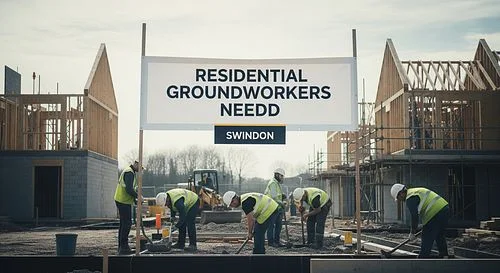
The work itself varies depending on the project stage. Early in a development, you might be involved in site clearance, removing vegetation, demolishing existing structures, or stripping topsoil. As the project progresses, activities shift to excavation work for foundations, trenching for utilities, and laying drainage systems.
Foundation preparation is some of the most critical work you'll do. This involves excavating to precise depths, ensuring the base is level and properly compacted, and often laying concrete for foundation slabs or footings. The accuracy of this work directly impacts everything that follows, so there's real responsibility involved.
Drainage installation is a substantial part of residential groundwork. You'll be laying pipes for surface water drainage, connecting to main sewers, installing soakaways, and ensuring proper falls and gradients. This work requires careful attention to building regulations and specifications.
As plots near completion, groundworkers handle external works—laying driveways, constructing footpaths, installing boundaries, and final landscaping preparation. This is when you start seeing the project come together, transforming from a muddy construction site into recognizable homes with gardens and access roads.
Working conditions can be challenging. Groundwork happens in all weather conditions, within reason. You'll work in rain, cold, and heat, though work stops if conditions become genuinely dangerous. Sites can be muddy, dusty, or both, depending on weather and project stage. It's outdoor work in every sense, which some people love and others find difficult.
The pace can be demanding, especially when projects are on tight schedules. Housing developments work to strict programs, with subsequent trades waiting to move in once groundwork is complete. This creates pressure to maintain productivity, though never at the expense of safety or quality.
Benefits of Working Through Workers Direct
Choosing to work through Workers Direct for Swindon housing projects offers several advantages compared to direct employment or working through other agencies.
Competitive rates are standard. Workers Direct understands that skilled groundworkers are in high demand, and they price accordingly. You'll receive fair compensation that reflects your skills, experience, and certifications. Workers with specialized machinery qualifications can negotiate even better rates.
Payment reliability is something you shouldn't have to worry about, and with Workers Direct, you don't. Weekly payments mean you're not waiting weeks to receive your wages. This regular payment schedule makes budgeting easier and demonstrates the agency's respect for workers.
Variety in work opportunities is another benefit. While this article focuses on Swindon housing projects, Workers Direct typically has access to multiple sites and projects. If you're someone who enjoys variety or wants to gain experience with different housebuilders and project types, working through an agency provides that flexibility.
Support and communication matter, especially when issues arise on site or you need advice about qualifications and career progression. Good agencies provide proper support, ensuring you have someone to contact if problems develop.
Access to training opportunities can be a real advantage. Some agencies, including Workers Direct, help arrange training courses or certification renewals, recognizing that investing in worker skills benefits everyone. This might include arranging CSCS card renewals, health and safety refreshers, or machinery training.
Career Progression Opportunities in Groundwork
Starting as a groundworker doesn't mean you're stuck in the same role forever. There's a genuine career path available for those who are ambitious and willing to develop their skills.
Many groundworkers progress into supervisory roles, becoming gang leaders or foremen responsible for managing teams. This transition requires not just technical skills but also leadership ability and deeper understanding of project management, quality control, and coordination with other trades.
Specialization is another route. You might focus on becoming a machine operator, which often commands higher rates and requires less of the heavy manual labor. Specialized areas like drainage expertise or concrete work can also position you as a sought-after specialist rather than a general groundworker.
Some experienced groundworkers transition into setting out engineering, using their practical knowledge combined with additional training to become responsible for ensuring works are constructed in the correct locations and to proper specifications. This is skilled work that bridges the gap between design and construction.
Eventually, some groundworkers establish their own subcontracting businesses, taking on groundwork packages for housebuilders and main contractors. This entrepreneurial path requires business skills beyond construction knowledge, but it's achievable for those with ambition and the right experience.
Further education is increasingly accessible, with apprenticeships and qualifications available even for those already working in the industry. NVQs and Level 2 or Level 3 qualifications in Groundwork or Civil Engineering can formalize your experience and open doors to better opportunities.
Living and Working in Swindon: What You Need to Know
If you're considering relocating to Swindon for groundwork opportunities, or you're local and want to understand the area better, here's what you should know.
Swindon offers relatively affordable living costs compared to nearby cities, particularly London, Bristol, or Oxford. Housing—whether renting or buying—is considerably cheaper, which means your wages go further. This affordability is actually one reason why housing developments are so popular here, driving the construction boom.
The town has good transportation links. Junction 15 and 16 of the M4 motorway provide easy access, and Swindon railway station offers fast connections to London (about 60 minutes), Bristol, and South Wales. For workers living elsewhere and commuting to Swindon sites, the connections are generally good.
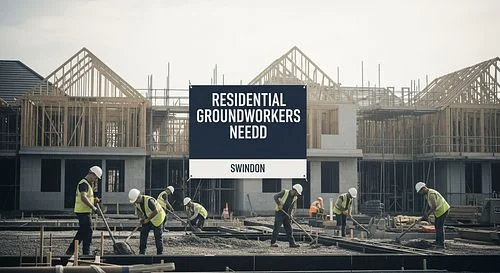
Most construction sites in Swindon are accessible by car, and many workers drive to sites daily. Parking is usually provided on or near construction sites. Public transport options to construction sites are typically limited, so having your own vehicle is practically essential.
The town itself has been undergoing significant regeneration beyond just housing. The town center has seen investment in retail and leisure facilities, and there's a decent selection of gyms, pubs, restaurants, and entertainment options for when you're not working.
Surrounding areas like Wiltshire's towns and villages offer alternatives if you prefer rural or small-town living while working on Swindon construction projects. Places like Wroughton, Stratton St Margaret, or further afield locations like Royal Wootton Bassett are all within reasonable commuting distance.
The Current Construction Landscape in Swindon
Understanding the broader context helps you appreciate why skilled groundworkers are so urgently needed right now.
Several major developments are currently underway or planned. The Tadpole Garden Village development, for instance, represents one of the largest housing projects in the region, planned to deliver thousands of homes over coming years. This isn't just one project—it's essentially a new community being built from scratch, requiring extensive groundwork for roads, utilities, drainage, and individual plot preparation.
Southern developments around areas like Wroughton have also seen substantial planning approvals, with multiple housebuilders active in the area. The Eastern Villages project continues expanding, bringing new housing to previously undeveloped land.
These aren't speculative projects that might not happen—they're committed developments with planning permission, funding secured, and housebuilders already on site or preparing to start work. For groundworkers, this means genuine long-term opportunities rather than hopeful promises.
The skill shortage in construction generally, and groundwork specifically, means that every housebuilder is competing for the same pool of qualified workers. This competition works in your favor as a skilled groundworker, giving you leverage to negotiate rates and choose projects that suit your preferences.
Government initiatives around housing delivery have created additional pressure to build more homes faster. National targets and local council housing requirements mean the construction pipeline remains full for years to come. This political and economic context translates directly into job security for construction workers.
How to Apply for Groundwork Positions Through Workers Direct
If you're interested in securing a position on Swindon housing projects, here's how to move forward.
Start by preparing your documentation. You'll need your CSCS card, proof of right to work in the UK, and any machinery or equipment certifications you hold. Having these documents ready speeds up the recruitment process considerably.
Contact Workers Direct directly through their recruitment channels. Most agencies now handle initial contact through websites, email, or phone. Be prepared to provide details about your experience, qualifications, and when you're available to start.
An initial conversation or interview will establish your background and skills. Be honest about your experience level—overselling your abilities leads to problems once you're on site. Equally, don't undersell yourself; if you have specific skills or experience, make sure to mention them.
Reference checks are standard in construction recruitment. Having contact details for previous supervisors or employers ready will help. Good references from respected companies or supervisors carry significant weight.
Some agencies conduct site visits or trials, especially if you're claiming advanced skills. This isn't about catching you out—it's about ensuring you're placed in positions where you'll succeed and be safe.
Once approved, you'll discuss available positions, rates, and start dates. Don't be afraid to ask questions about specific projects, what trades you'll be working alongside, or typical shift patterns. Understanding what you're committing to prevents misunderstandings later.
Safety Considerations in Residential Groundwork
Safety cannot be overstated when discussing groundwork. This sector has historically seen higher rates of serious incidents compared to other construction activities, making safety awareness absolutely essential.
Excavation work presents particular risks. Trenches and excavations can collapse without warning, potentially trapping or burying workers. Proper shoring, battering back slopes, or using trench boxes are essential protective measures. Never enter an unsupported excavation, regardless of how stable it appears.
Working near or operating plant and machinery requires constant vigilance. Struck-by incidents involving excavators, dumpers, or other vehicles are a significant cause of injuries and fatalities on construction sites. Segregation between pedestrians and vehicles, proper signaling systems, and awareness of machinery blind spots all help prevent accidents.
Underground services present serious hazards. Striking electricity cables, gas pipes, or water mains can have catastrophic consequences. Always check plans, conduct surveys where necessary, and use proper locating equipment before excavating. The saying "dig safe" exists for good reason.
Manual handling risks are ever-present in groundwork. Lifting heavy materials, repetitive motions, and awkward postures can lead to musculoskeletal injuries that might affect you for life. Using proper techniques, mechanical aids where possible, and working as a team for heavy lifts protects your long-term health.
Environmental conditions add further risks. Working in extreme cold can cause hypothermia or reduce dexterity, increasing accident risk. Hot weather brings dehydration and heat exhaustion risks. Rain makes surfaces slippery and can affect excavation stability. Awareness and appropriate precautions for conditions are essential.
Personal protective equipment is your last line of defense. Hard hats, high-visibility clothing, safety boots, and gloves are standard. Depending on activities, you might also need hearing protection, dust masks, safety glasses, or hi-vis waterproofs. PPE only works when worn correctly and consistently.
Long-term Prospects for Construction Workers in Swindon
Looking beyond immediate opportunities, what does the future hold for groundworkers in Swindon?
The outlook remains strongly positive. Housing need across the UK continues to exceed supply, and Swindon features prominently in regional growth strategies. Government targets for new housing delivery, combined with Swindon's attractiveness as a development location, suggest ongoing construction activity for the foreseeable future.
Infrastructure investment accompanies housing growth. New schools, healthcare facilities, retail areas, and transport improvements all require groundwork before construction. These associated developments create additional opportunities beyond purely residential work.
Climate change considerations are influencing groundwork practices. Sustainable drainage systems (SuDS), permeable paving, and water management features are increasingly required in new developments. Groundworkers who develop expertise in these areas will find themselves particularly valuable.
Technology is gradually changing groundwork practices. GPS-guided machinery, laser levels, and digital setting-out equipment are becoming more common. Workers who embrace these technologies rather than resisting them will find career advancement easier.
The aging workforce in construction means that demand for younger workers entering the trades will only increase. If you're early in your career, the progression opportunities should be excellent as experienced workers retire and leave gaps that need filling.
Economic uncertainties always exist, of course. Construction is cyclical and sensitive to economic conditions. However, residential construction tends to be more resilient than commercial or industrial sectors, particularly when supported by political commitment to housing delivery.
Frequently Asked Questions (FAQs) for Residential Groundworkers in Swindon
1. What qualifications and experience do I need to be a residential groundworker in Swindon?
To work as a groundworker on most sites in Swindon, a CSCS card (Construction Skills Certification Scheme) is absolutely essential for demonstrating basic health and safety knowledge. For many roles, particularly those involving machinery, relevant plant operation tickets (e.g., CPCS or NPORS for excavators, dumpers) are highly advantageous or required. While entry-level positions might be available for those with a strong work ethic and willingness to learn, prior experience in groundworks or general construction is often preferred. Relevant NVQs or apprenticeships in groundwork can also significantly boost your application.
2. What kind of housing projects will I be working on in Swindon?
Swindon's residential construction market is incredibly diverse, offering a wide range of projects. You could be involved in large-scale new build estates by major developers, smaller bespoke housing developments, innovative eco-friendly homes (like those in The Triangle project), or significant affordable housing initiatives led by the local council. This variety means you'll gain experience across different project scales and types, enriching your skillset and keeping the work interesting.
3. How does Workers Direct help me find a groundworker job in Swindon, and what's the typical pay?
Workers Direct acts as your dedicated recruitment partner. We have strong relationships with leading construction companies and developers in Swindon, giving us access to exclusive job opportunities often not advertised elsewhere. We'll work with you to understand your skills, experience, and career goals, then match you with suitable roles. We assist with CV preparation, interview guidance, and negotiating competitive pay rates. The average hourly pay for a groundworker in Swindon is currently around £20.32 per hour , and we aim to secure the best possible rates for our candidates.
4. Is there room for career progression as a groundworker, and what are the typical pathways?
Absolutely! A career as a groundworker offers excellent opportunities for progression. Many groundworkers advance to roles such as Team Leader or Chargehand, overseeing smaller teams and tasks. With further experience and skill development, you could move into a Groundworks Supervisor position, managing larger elements of a project. Some even progress to Assistant Site Manager or Site Manager roles, especially given their fundamental understanding of site operations. Upskilling with advanced plant tickets and pursuing relevant NVQs or diplomas in construction management can significantly accelerate your career path.
5. What are the typical working conditions for a residential groundworker?
As a residential groundworker, you'll primarily be working outdoors on construction sites, so you'll need to be prepared for various weather conditions. The work is physically demanding, involving tasks like digging, lifting, operating machinery, and standing for long periods. You'll be part of a team, adhering strictly to health and safety regulations, and wearing appropriate Personal Protective Equipment (PPE). While challenging, the role is incredibly rewarding, offering a tangible sense of accomplishment as you see new homes and communities take shape from your efforts.