















Your Complete Guide to Hiring Elite Remote Help Desk Technicians in 2026
Discover the strategies, tools, and insights needed to build a world-class remote IT support team that drives productivity and secures your digital infrastructure from anywhere in the world.
Hire a Remote Help Desk Technician TodayThe digital transformation of the modern workplace has made the Help Desk Technician Remote role one of the most critical and in-demand positions across all industries. No longer confined to a physical office, these IT professionals provide the frontline defense and support that keeps businesses operational, secure, and productive. For employers, navigating this shift requires a new playbook for recruitment, management, and retention. This comprehensive guide delves into every facet of building and managing a high-performing remote IT support team, offering actionable strategies to secure top talent and optimize your support operations for the future.
Pro-Tip:
The most successful remote help desk hires aren't just tech-savvy; they are exceptional communicators and proactive problem-solvers. Prioritizing soft skills like empathy, clear written communication, and self-motivation is as crucial as verifying technical certifications.
The Strategic Imperative for Remote IT Support
The transition to remote and hybrid work models is permanent. This evolution has expanded the"workplace" to encompass hundreds of home networks, personal devices, and varied software environments. A Remote Help Desk Technician must now troubleshoot issues in a vastly more complex and decentralized ecosystem. For sectors with stringent security and uptime requirements, such as Aerospace Staffing and advanced manufacturing, the reliability of IT support is non-negotiable. A single point of failure in communication or system access can lead to significant project delays and financial loss.
Building this team isn't just about filling a vacancy; it's a strategic investment in business continuity. It requires a forward-looking approach to talent acquisition, similar to the methodologies outlined in our resource on Future-Proof Candidate Screening Strategies For 2026. By anticipating the technical and interpersonal skills needed for tomorrow's challenges, you can build a support desk that scales with your company's growth.
Core Skills & Qualifications for the Modern Remote Help Desk Technician
Identifying the right candidate goes beyond a checklist of software names. The following grid outlines the essential skill categories that define elite remote support talent.
Technical Proficiency
- • Mastery of ticketing systems (Zendesk, Freshservice, Jira)
- • Remote desktop support tools (TeamViewer, AnyDesk, BeyondTrust)
- • Network diagnostics & VPN troubleshooting
- • Basic understanding of cloud platforms (Microsoft 365, Google Workspace, AWS)
Communication & Soft Skills
- • Exceptional written communication for chat & email support
- • Patience and empathetic customer service
- • Ability to explain complex issues in simple terms
- • Proactive status updates and follow-through
Self-Management & Mindset
- • High degree of self-motivation and time management
- • Adaptability to changing procedures and tools
- • A continuous learning mindset for new technologies
- • Strong problem-solving and analytical thinking
Interactive Overview: Remote Help Desk Hiring Models
Choosing the right employment model is a strategic decision that impacts cost, flexibility, and control. Explore the options below to determine the best fit for your organization's needs.
The Permanent Remote Hire
This model involves recruiting a full-time employee directly onto your payroll. It's ideal for businesses seeking long-term stability, deep cultural integration, and investment in an employee's career growth within the company.
Best for: Companies with consistent, high-volume support needs, those handling sensitive data (common in Aerospace Staffing or finance), and organizations building a core, dedicated IT team.
Considerations: Requires a comprehensive recruitment process, including robust background checks and a thorough remote onboarding program. The long-term commitment is higher, but so is employee loyalty and institutional knowledge.
Building a World-Class Remote Hiring Process
Attracting and securing top-tier remote talent requires a process designed for the digital age. It must be efficient, engaging, and effectively assess both technical and remote-work competencies.
1. Crafting the Irresistible Job Description
Your job description is your first point of contact. Beyond listing requirements, sell the role and the culture. Clearly state it's a remote position and specify any time-zone expectations. Highlight opportunities for growth, the technology stack they'll support, and the impact they'll have on the business. Emphasize a culture of trust and results, not micromanagement.
2. Implementing a Multi-Stage Virtual Screening Process
Relying solely on a resume is insufficient. Implement a staged approach:
- Initial Skills Assessment: Use a brief, practical test (e.g., diagnosing a described network issue via email, or navigating a mock ticketing scenario).
- Structured Video Interview: Focus on behavioral questions."Describe a time you had to explain a complex technical issue to a non-technical user.""How do you prioritize your ticket queue when everything is marked 'urgent'?"
- Technical Deep-Dive: A live, collaborative session with a senior team member using a shared document or a safe, sandboxed environment to troubleshoot a simulated problem.
This rigorous approach aligns with the principles in Candidate Screening Strategies For 2026: The Definitive Blueprint, ensuring you evaluate for both competence and remote-work fit.
3. The Critical Role of Remote Onboarding
A poor onboarding experience is the leading cause of early turnover in remote roles. A successful remote onboarding plan should be structured, supportive, and span at least the first 90 days. It must include:
Technology & Access
Ship all equipment (laptop, peripherals) well before Day 1. Have all accounts (email, ticketing system, VPN, internal wiki) pre-provisioned and tested. Assign an IT buddy for setup questions.
Process & Culture Integration
Schedule daily check-ins with the manager for the first two weeks. Provide clear documentation on escalation paths, SLAs, and communication norms. Introduce them to the team through virtual coffee meetings.
For a comprehensive framework, our guide on Onboarding New Employees provides actionable steps to ensure your new remote technician feels connected and productive from day one.
Tools, Management, and Best Practices for Success
Managing a remote help desk team effectively requires the right technology stack and leadership approach focused on outcomes, not activity.
Essential Technology Stack
- Unified Ticketing & ITSM Platform: The single source of truth for all issues, knowledge base, and asset management.
- Remote Monitoring and Management (RMM): Tools like NinjaRMM or ConnectWise Automate for proactive system health checks and remote control.
- Secure Communication Hub: Slack or Microsoft Teams for real-time collaboration, with dedicated channels for urgent alerts.
- Video Conferencing: Zoom or Google Meet for daily stand-ups, team meetings, and face-to-face user support when needed.
- Password Manager & VPN: Non-negotiable for secure credential sharing and network access.
Management & Engagement Strategies
- Focus on Output Metrics: Measure first-call resolution rate, customer satisfaction (CSAT) scores, and mean time to resolve (MTTR), not hours logged online.
- Regular, Structured Communication: Implement a daily 15-minute team huddle and weekly one-on-ones focused on career development and blockers.
- Foster Virtual Team Culture: Create non-work channels for social interaction, celebrate wins publicly, and invest in virtual team-building activities.
- Provide Clear Career Pathways: Show how a Remote Help Desk Technician can advance to L2/L3 support, systems administration, or IT management within the organization.
Frequently Asked Questions (FAQ)
Get immediate answers to the most common questions about hiring and managing remote IT support staff.
Salaries vary significantly based on experience, technical specialization, industry, and location. As of 2026, in the UK, entry-level remote help desk roles can start from £22,000 - £28,000. Technicians with 3-5 years of experience, especially those with cloud or security certifications supporting specialized sectors like Aerospace Staffing, can command £35,000 - £50,000+. Always benchmark against current market data and consider the total compensation package, including benefits, training budgets, and flexibility.
Security is paramount. Mandate the use of a company-provided, encrypted laptop with full-disk encryption. Enforce strict VPN use for all system access. Utilize role-based access control (RBAC) to grant minimum necessary permissions. Implement a password manager for secure credential sharing, and ensure all remote desktop sessions are logged and monitored. Regular security awareness training and a clear acceptable use policy (AUP) that all technicians must sign are non-negotiable components of a secure remote work environment.
Partnering with a specialized IT staffing agency is the most reliable method for rapid hiring. Agencies maintain pools of pre-vetted, immediately available candidates. They handle the sourcing, initial screening, and credential verification, often presenting qualified candidates within 48-72 hours. This approach, detailed in resources like How To Book Temporary Staff Quickly, transforms an urgent staffing crisis into a managed, efficient process, ensuring you get a skilled professional without compromising on quality or security.
Key Performance Indicators (KPIs) are essential. Focus on a balanced scorecard: Efficiency (Tickets resolved per day, First Contact Resolution rate), Quality (Customer Satisfaction Score, Number of escalations), Timeliness (Average First Response Time, Mean Time to Resolution), and Knowledge (Contributions to the internal knowledge base). Use your ITSM tool's reporting dashboard to track these metrics weekly and review them in team meetings. This data-driven approach aligns with modern HR Solutions focused on transforming talent management.
The Future of Remote IT Support
The role of the Help Desk Technician Remote will continue to evolve. We can expect greater integration of AI and chatbots to handle tier-1 queries, freeing technicians for more complex problem-solving. Technicians will need skills in managing AI-assisted workflows and analyzing data from these tools to improve service delivery. Furthermore, as cybersecurity threats grow, basic security protocol enforcement and user education will become an even larger part of the support remit.
Staying ahead requires a commitment to continuous learning and agile hiring practices. By building a strategic partnership with a recruitment expert, you can ensure your IT support capability is not just reactive, but a proactive driver of business innovation and resilience.
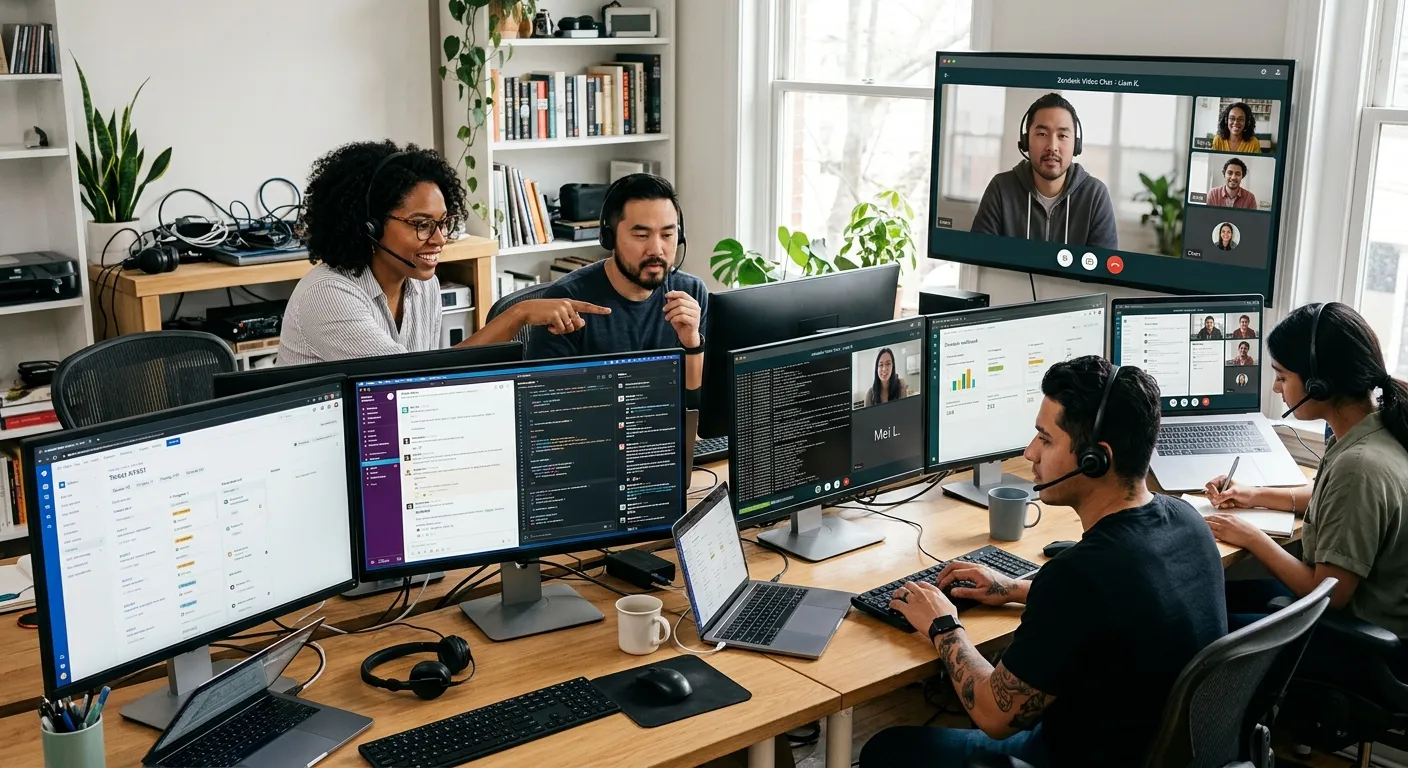
Ready to Build Your Elite Remote Support Team?
Stop letting IT support challenges slow down your business. Whether you need a permanent specialist, temporary cover, or a fully managed staffing solution, we have the expertise and the vetted talent pool to deliver.
Need immediate assistance? Our talent specialists are ready to connect you with pre-screened, qualified Help Desk Technician Remote professionals in days, not months.