
















Hire Elite Turret Lathe Operators: Build Your Precision Manufacturing Team Today
Discover the critical role of skilled Turret Lathe Operators, understand the skills needed to hire top talent, and leverage expert staffing strategies to secure your production line's success.
Post a Job & Hire a Turret Lathe Operator Now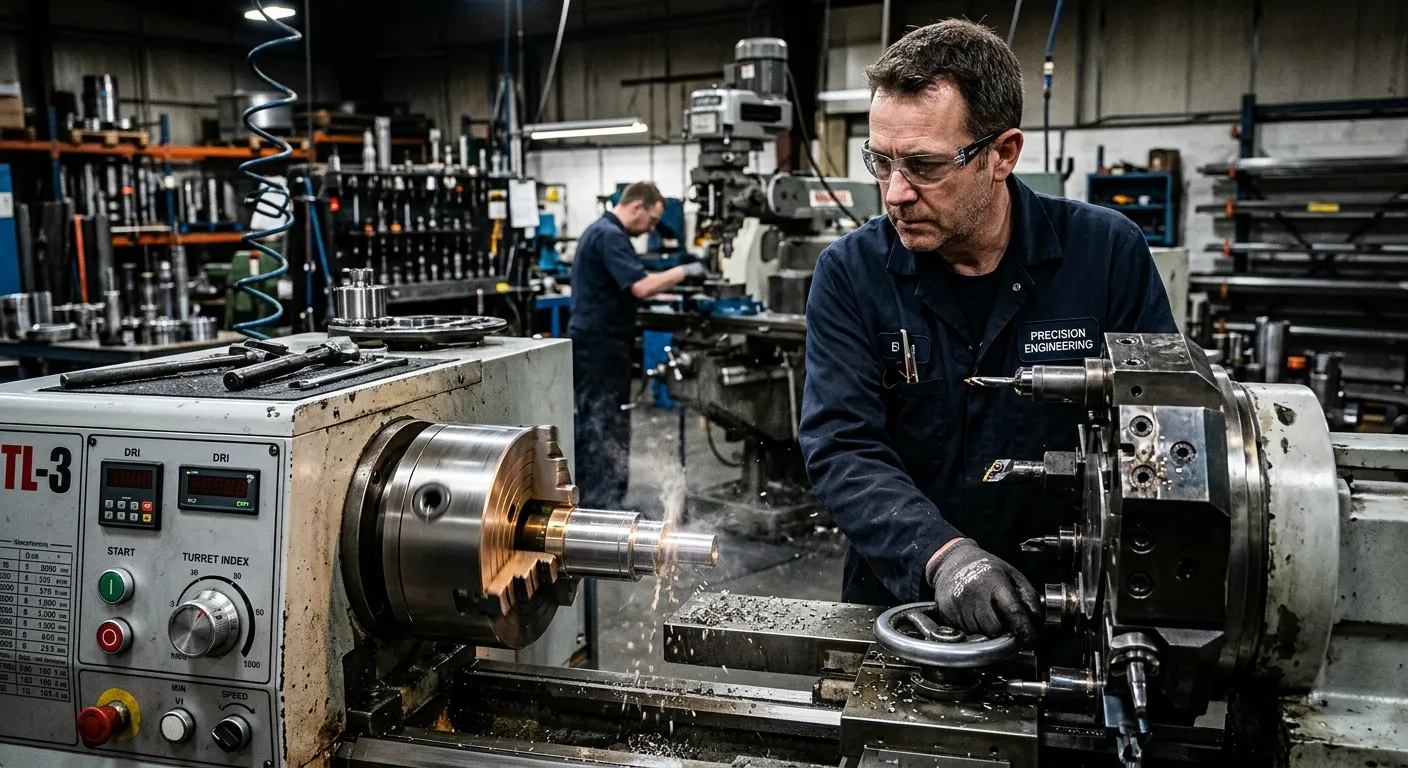
The Complete Guide to Turret Lathe Operations & Staffing
Navigate the multifaceted world of precision machining and staffing with our detailed breakdown.
What is a Turret Lathe Operator?
A Turret Lathe Operator is a highly skilled machining professional responsible for setting up, operating, and maintaining turret lathes—versatile machine tools used for precision metalworking. Unlike engine lathes, turret lathes feature a hexagonal turret that holds multiple cutting tools, allowing for rapid, sequential operations without manual tool changes. This makes them ideal for producing large batches of complex parts with consistent accuracy.
The role is pivotal in industries such as aerospace, automotive, defense, and general engineering. An operator must interpret complex engineering drawings, select appropriate tools and materials, calculate speeds and feeds, and perform meticulous quality checks. The efficiency and skill of your Turret Lathe Operator directly impact production throughput, waste reduction, and overall product quality, making their recruitment a strategic business decision. For a parallel in understanding the importance of specialized talent acquisition in other sectors, consider the insights from our guide on securing elite props handlers.
Core Competencies & Certification
Hiring the right talent requires a clear understanding of the non-negotiable skills. A top-tier candidate will possess a blend of technical knowledge, practical dexterity, and analytical thinking.
- Technical Proficiency: Mastery of reading Geometric Dimensioning and Tolerancing (GD&T) blueprints, understanding metallurgy, and expertise in CNC programming basics for modern turret lathes.
- Precision Measurement: Expert use of micrometers, calipers, gauges, and Coordinate Measuring Machines (CMM) to ensure parts meet exact specifications.
- Machine Setup & Maintenance: Ability to install tooling, set work offsets, perform first-article inspections, and conduct routine preventative maintenance to minimize downtime.
- Safety & Compliance: Rigorous adherence to health and safety protocols, including PPE usage, Lockout-Tagout (LOTO) procedures, and workshop safety standards. This level of compliance is as critical as that required for CSCS certified personnel on construction sites.
- Problem-Solving: Diagnosing issues like tool wear, chatter, or dimensional inaccuracies and implementing corrective actions swiftly.
Relevant certifications, such as a National Vocational Qualification (NVQ) in Mechanical Manufacturing Engineering or a City & Guilds certification, are strong indicators of formal training.
Strategic Recruitment for Machining Talent
Finding a proficient Turret Lathe Operator in a competitive market demands a proactive and strategic approach. Relying solely on generic job boards often yields underqualified candidates.
Implementing a robust screening process is paramount. Techniques like practical skills assessments, where a candidate performs a test piece, are far more revealing than interviews alone. This aligns with the advanced methodologies discussed in our resource on candidate screening strategies for 2026. Furthermore, partnering with a specialized industrial staffing agency provides access to a pre-vetted talent pool, significantly reducing time-to-hire and mitigating the risk of a bad fit. For a comprehensive view on building a winning team, explore our guide on how to best hire employees.
Pro-Tip: The Value of Temp-to-Perm
Consider a temp-to-perm arrangement. This allows you to evaluate a Turret Lathe Operator on the job, assessing their skills, work ethic, and team fit before making a permanent commitment. It's a low-risk strategy that ensures you only hire the best. This flexible approach is a cornerstone of modern temp job agency services.
Industry Trends & Future Outlook
The manufacturing sector is undergoing rapid digital transformation. While the core principles of turret lathe operation remain, the role is increasingly intertwined with technology.
Modern operators often need familiarity with CNC controls and basic CAD/CAM software. The demand for skilled machinists remains consistently high due to a skills gap, with experienced Turret Lathe Operators commanding competitive salaries. Investing in upskilling your current workforce and implementing forward-thinking recruitment, as outlined in the ultimate guide to elite team building, is essential for future-proofing your operations. The stability of this skilled trade contrasts with but complements the dynamic demand seen in sectors like warehouse jobs in Luton, highlighting the diverse talent needs across industry.
Key Benefits of Hiring a Skilled Turret Lathe Operator
Investing in expert machining talent delivers direct, measurable returns across your manufacturing process.
Enhanced Precision & Quality
A skilled operator minimizes dimensional errors and surface finish defects, ensuring every component meets stringent quality standards. This reduces scrap rates, rework costs, and customer rejections, protecting your brand reputation and bottom line.
Maximized Machine Uptime & Output
Expert setup and proactive maintenance prevent unexpected breakdowns. An efficient Turret Lathe Operator optimizes cycle times and tool life, pushing your machinery to its productive capacity and ensuring you hit critical production deadlines consistently.
Stronger On-Site Safety Culture
Professional operators are trained in rigorous safety protocols. Their presence reduces the risk of costly accidents, injuries, and associated downtime. A safe workshop is a productive workshop, much like the foundational safety required for any construction and industrial site.
A Deep Dive into the Turret Lathe Operator Role
Daily Responsibilities & Workflow
The day of a Turret Lathe Operator is structured around precision and process. It typically begins with reviewing the job sheet and engineering drawings for the scheduled parts. The operator then selects the appropriate raw material (e.g., steel, aluminium, brass) and the necessary cutting tools (turning tools, drills, boring bars) from the crib. The most critical phase is machine setup: mounting the workpiece in the chuck or collet, installing tools into the turret stations, and inputting or verifying the machine's program and work offsets.
Once the first part is run, the operator performs a meticulous first-article inspection using precision measuring instruments. Only after this part passes all checks does batch production begin. Throughout the run, the operator monitors the machine for signs of tool wear, listens for unusual sounds, and conducts periodic quality checks on samples. Maintaining a clean and organized workspace and completing production logs are also key daily tasks.
The Cost of an Unfilled Role or Poor Hire
Leaving a turret lathe idle or manned by an unqualified individual has severe financial implications:
- Direct Production Loss: An unfilled shift means zero output from a high-value capital asset, directly hitting revenue.
- Increased Scrap & Rework: An inexperienced operator can produce entire batches of out-of-spec parts, wasting expensive materials and labour.
- Machine Damage: Incorrect setup or operation can lead to catastrophic crashes, resulting in repair costs reaching tens of thousands and extended downtime.
- Project Delays: Missed internal deadlines can delay final product assembly and shipment, leading to contract penalties and lost customer trust.
- Morale Drain: Understaffing forces other skilled workers to cover or rush, increasing errors and burnout across the team.
These hidden losses mirror the risks in other operational areas, similar to the detailed analysis in our video The Real Cost of Leaving a Warehouse Shift Understaffed. A strategic hiring process, potentially leveraging a specialized staffing service, is not an expense but a critical investment in operational continuity.
Expert Insight: Bridging the Skills Gap
"The manufacturing skills gap is real, but it's not insurmountable. Businesses often look for the 'perfect' candidate with 20 years of experience on the exact machine. A more effective strategy is to hire for core aptitude—strong mechanical reasoning, attention to detail, and a willingness to learn—and then invest in specific machine training. Partnering with an agency that understands machining allows you to access candidates who are pre-assessed for these foundational abilities, dramatically shortening your path to a productive team member."
– Industry Specialist, Workers-Direct Industrial Staffing. This philosophy of adaptive talent sourcing is central to our approach, as detailed in our blueprint for elite recruitment.
Frequently Asked Questions: Turret Lathe Operators
Get immediate answers to the most common questions about hiring and working in this skilled trade.
What's the difference between a Turret Lathe Operator and a CNC Machinist?
While there is overlap, a Turret Lathe Operator typically works on manually controlled or semi-automatic turret lathes, where skill lies in manual setup, tool positioning, and leveraging the turret's mechanical sequence. A CNC Machinist primarily programs and operates computer numerically controlled machines, where the tool paths are dictated by G-code. Many modern roles require hybrid skills, but the core distinction is the level of manual control versus computer programming.
How can I quickly verify a candidate's practical skills?
The most effective method is a hands-on skills test. Provide a simple engineering drawing, a piece of stock material, and access to a lathe. Ask the candidate to plan the job, select tools, set up the machine, and produce the part within a time limit. Observing their process, safety habits, and the final part's quality is invaluable. For businesses without the capacity for such tests, partnering with an agency that conducts rigorous practical assessments, as part of their candidate screening & selection process, is the ideal solution.
Are there temporary or contract Turret Lathe Operators available?
Absolutely. Skilled machining talent is available for short-term contracts, seasonal peaks, or to cover leave and specific projects. This flexibility is crucial for managing fluctuating order books without committing to a permanent headcount. Sourcing such specialized temporary staff is a key service offered by industrial recruitment experts, similar to how agencies provide temporary admin staff or other niche roles.
What safety certifications should a qualified operator hold?
While not always mandatory like a CSCS card for construction, essential safety training includes:
- Manual Handling
- Abrasive Wheels regulations (for grinding operations)
- Control of Substances Hazardous to Health (COSHH)
- Workshop-specific induction and machine guarding training.
Ready to Secure Your Precision Manufacturing Talent?
Don't let a skills gap slow down your production. Whether you need a permanent Turret Lathe Operator, temporary cover, or are building a full machining team, our specialized industrial recruitment expertise connects you with pre-vetted, highly skilled professionals.
Streamline your hiring with our proven process. From understanding your specific machine requirements to handling compliance and payroll, we make building your elite team simple and efficient. Discover more about our full suite of solutions on our What We Do page.
Need other skilled staff? We also specialize in providing reliable Campus Security Staff and a wide range of industrial, construction, and administrative professionals across the UK.